The horror genre has long served as a fertile ground for remakes and reboots. When a film terrifies and resonates deeply, studios see a ready-made audience eager for a fresh spin. By 2026, however, the landscape is littered with cautionary tales—high-profile attempts that promised modern scares but delivered only disappointment. While some reimaginings manage to honour their source material, the worst offenders misunderstand the very essence of what made the originals timeless. From miscast slasher icons to shot-for-shot experiments drained of soul, these ten horror remakes stand as textbook examples of how not to resurrect a classic.
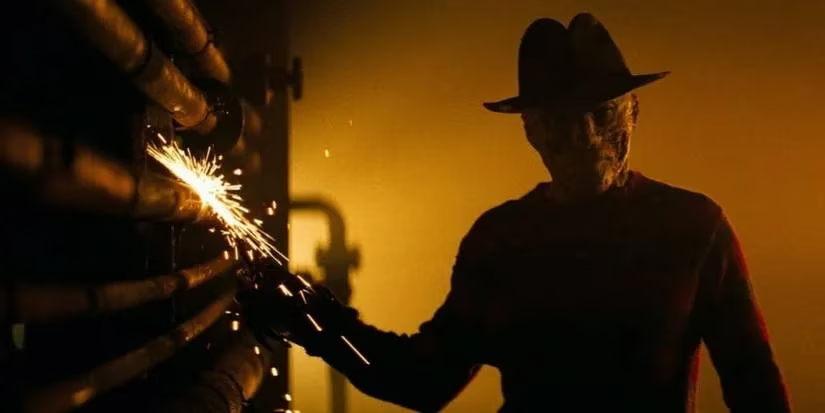
🛌 A Nightmare on Elm Street (2010)
Wes Craven’s 1984 slasher revolutionised the genre by turning sleep itself into a death trap. Freddy Krueger, a vengeful child killer who stalked dreams, was both a demonic force and a darkly witty presence, embodied perfectly by Robert Englund. The 2010 remake made a critical mistake by casting Jackie Earle Haley, a talented actor, but one who could never replicate Englund’s sinister charisma. Stripped of the original’s subversive layers, the retelling became a generic body-count flick with no psychological depth. Audiences and critics alike mourned the loss of the dream-weaving mythology that had made Elm Street so much more than a simple slasher.
📸 Shutter (2008)
After the triumphant American adaptation of Ringu became The Ring, Hollywood rushed to mine Asian horror for every last drop of supernatural terror. One of the most lifeless products of this gold rush was Shutter, a remake of the 2004 Thai chiller about a ghost that reveals itself in photographs. Starring Joshua Jackson and Rachael Taylor, the film limped to an 11% Rotten Tomatoes score, with critics slamming its complete lack of invention. Every scare felt borrowed, every moment predictable. Rather than introducing the original’s eerie atmosphere to a new audience, the remake turned a tale of vengeful grief into a forgettable, by-the-numbers ghost story.
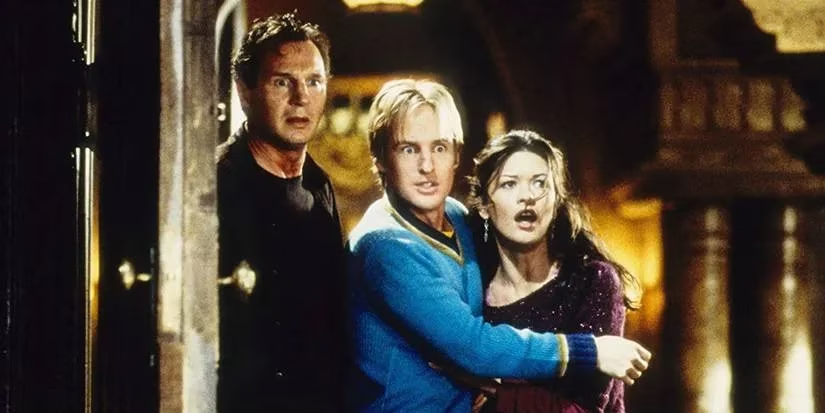
🏚️ The Haunting (1999)
Robert Wise’s 1963 The Haunting earned its status as one of cinema’s greatest haunted-house films by understanding that the unseen is infinitely more frightening than any computer-generated ghoul. The 1999 remake, directed by action specialist Jan de Bont, threw subtlety out the window. A cast that included Liam Neeson, Catherine Zeta-Jones, and Owen Wilson should have elevated the material, but the over-reliance on garish visual effects turned the nebulous dread into cartoon spectacle. The result earned five Razzie nominations, including Worst Picture, and served as a noisy, hollow shell of a genuinely frightening masterpiece.
🎃 Halloween (2007)
Rob Zombie’s reimagining of John Carpenter’s 1978 landmark tried to humanise Michael Myers, dedicating a large chunk of the runtime to his troubled childhood. While the director’s desire to try something new was commendable, the choice obliterated the very thing that made Myers terrifying: he was the Shape, an unknowable, faceless boogeyman. Stripping away the mystery resulted in a grim, overly brutal film that felt disconnected from the elegant simplicity of the original. The later 2018 trilogy proved that audiences still craved the Myers of old, making Zombie’s muddled vision an even more glaring disappointment in hindsight.
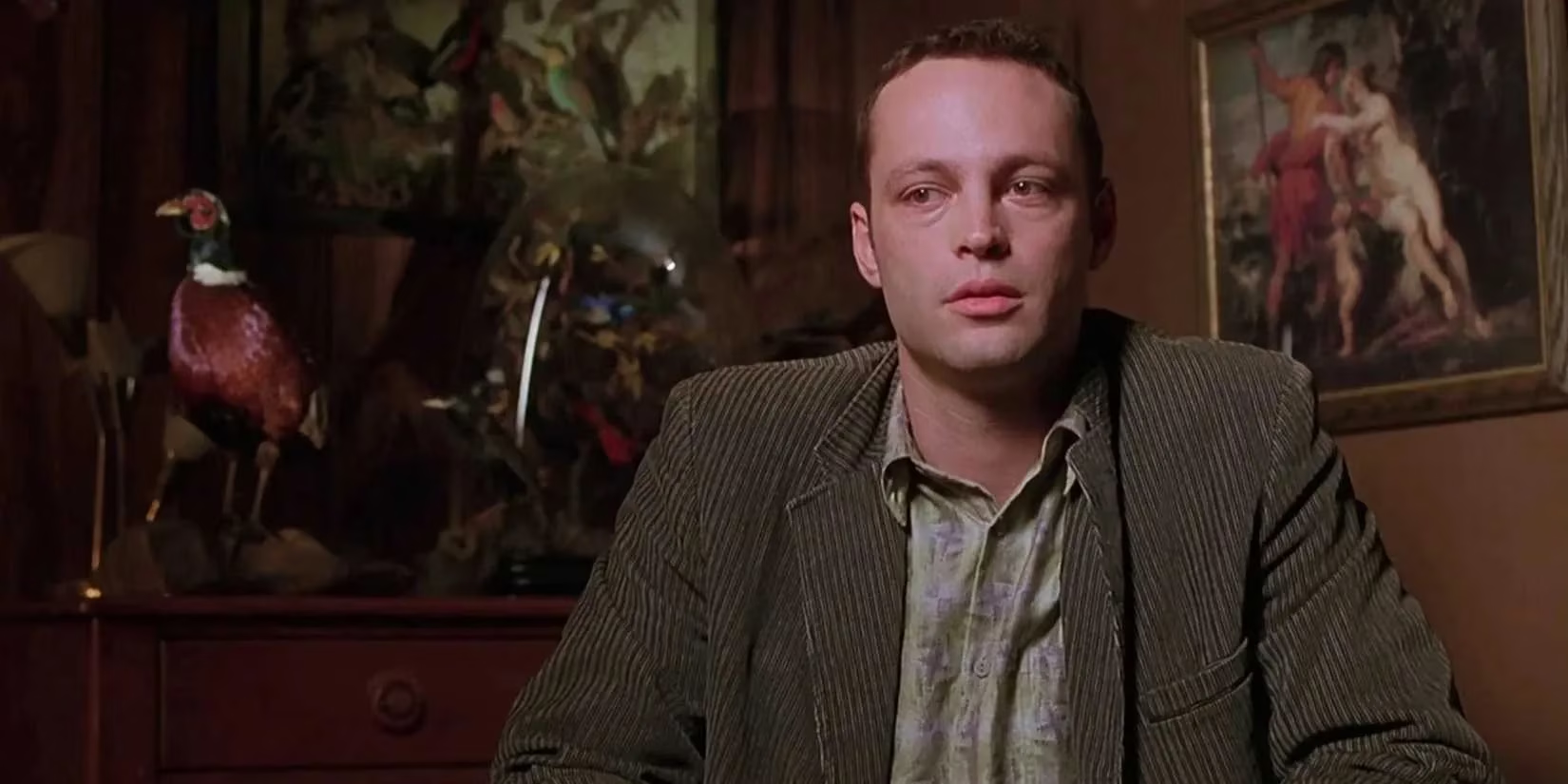
🚿 Psycho (1998)
Gus Van Sant’s Psycho was less a remake and more an avant-garde experiment gone wrong. The director’s decision to produce a nearly shot-for-shot colour replica of Hitchcock’s black-and-white masterpiece baffled everyone. Vince Vaughn, badly miscast, brought none of Anthony Perkins’s nervous vulnerability to Norman Bates. Without a single new idea or twist, the film felt redundant—a xeroxed copy of a moment that could only work once. Critics panned it, audiences stayed away, and the experiment proved that fidelity alone cannot recreate lightning in a bottle.
🧟 Night of the Living Dead 3D (2006)
George A. Romero’s 1968 zombie urtext received a respectable 1990 remake helmed by Tom Savini, but a second attempt, Night of the Living Dead 3D, arrived dead on arrival. Capitalising on a fleeting 3D revival, the film delivered hokey, old-fashioned gimmickry rather than the immersive effect audiences expected. Even the presence of genre stalwart Sid Haig couldn’t save it. The remake felt like a cynical cash grab, exploiting the public-domain status of the original. Dull, flatly acted, and visually cheap, it remains a footnote that tarnishes the legacy it sought to exploit.
🌫️ The Fog (2005)
John Carpenter’s The Fog was a modest cult gem: a ghost-pirate tale wrapped in creeping coastal atmosphere and anchored by a spine-tingling synth score. The 2005 remake jettisoned everything that made the original special. Tom Welling, Maggie Grace, and Selma Blair struggled to inject life into a script devoid of scares or suspense. Without Carpenter’s music or his masterful control of mood, the film felt hollow, earning a rock-bottom 4% on Rotten Tomatoes. It stands as a textbook case of how removing an auteur’s signature can sink a project entirely.
🧠 Day of the Dead (2008)
Romero’s Day of the Dead was a bleak, claustrophobic meditation on military decay and scientific hubris. The 2008 remake, directed by Steve Miner, abandoned all subtext for cheap shocks. Headlined by Mena Suvari and Nick Cannon, the film was derided as stereotypical and overflowing with lacklustre effects. Critics called it “cheap horror” for undemanding viewers, and Miner—who had previously crafted the entertaining Lake Placid—essentially ended his horror directing career after this misfire. It proved that not every zombie property can be rescued by a modern gloss.
👁️ The Eye (2008)
The Pang brothers’ 2002 South Korean original was a gripping tale of a corneal transplant that lets a young woman see terrifying premonitions. The American remake, starring Jessica Alba, drained away every ounce of tension. Alba’s performance earned her a Razzie nomination, and the film’s reliance on jump-scares and CGI visions felt wooden compared to the original’s haunting subtlety. In an era saturated with Asian horror remakes, The Eye exemplified the worst tendencies: taking a smart, atmospheric story and diluting it into a lifeless, star-vehicle product.
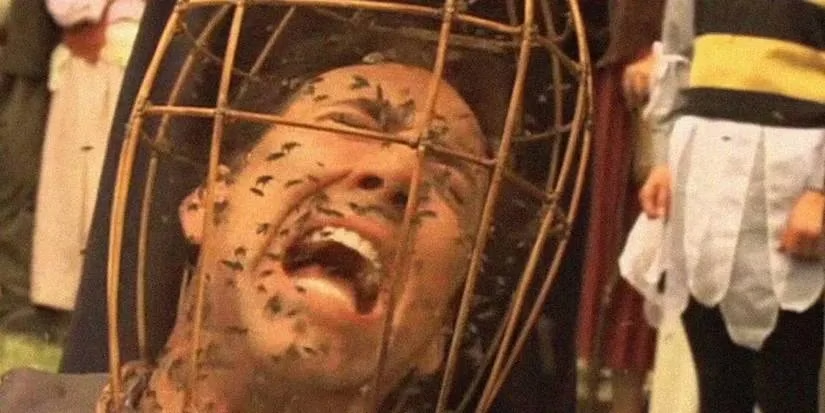
🐝 The Wicker Man (2006)
The original 1973 Wicker Man is a British folk-horror masterpiece that balances police-procedural earnestness with a slow-burn descent into pagan dread. The 2006 remake, starring Nicolas Cage, inexplicably transformed this revered story into an unintentional farce. Cage’s unhinged performance, complete with his now-infamous bee-related outburst, reduced the intricate narrative to a meme factory. Drastic, pointless changes and a tone hopelessly at odds with the source material made the remake a laughingstock. It remains one of the most baffling adaptations ever committed to film, a remake that insults the memory of the original with every shrill scream.
In the years since their releases, these ten horror remakes have aged poorly, serving as enduring reminders that a beloved title and a familiar brand are no guarantees of quality. Whether through miscasting, excessive CGI, or a fundamental misunderstanding of what made the originals great, each film offers a lesson in what not to do. As of 2026, where legacy sequels and thoughtful requels have found more favour, the industry has largely moved on—but the scars left by these disappointments remain, and fans still regard them with the same shudder they reserve for the most cringe-worthy of on-screen horrors.
Leave a Comment
Comments