Sitting here in 2026, I can still feel the electric buzz from the news that broke just last year. It seems the future has a way of circling back to its own past, and in this case, it's bringing one of science fiction's founding fathers with it. Legendary Pictures confirmed they're developing a brand-new Buck Rogers movie, with none other than Deadpool & Wolverine scribe Zeb Wells tackling the screenplay. For someone like me, who grew up on the faded re-runs of the 1979 TV show and hunted down old pulp magazines, this isn't just another reboot announcement. It feels like unearthing a perfectly preserved time capsule from the dawn of the space age, only to find its contents are more relevant than ever. The project is diving back to the pure, untamed source: Philip Francis Nowlan's 1928 novella Armageddon 2419 A.D., the original story of a 20th-century man thrust into a 25th-century war. In an era where franchises are remade faster than a speeding photon, there's something profoundly exciting about reviving a character who invented the template.
To understand why this matters, you have to grasp what Buck Rogers was. He wasn't just a character; he was a cultural Big Bang. Conceived in the late 1920s by Chicago publisher John F. Dille, Buck exploded into the public consciousness through a daily newspaper comic strip that became as essential as the morning coffee for millions. His premise was elegantly simple, a sci-fi twist on an old fable: Anthony "Buck" Rogers, a coal mine inspector, is exposed to a strange gas and falls into suspended animation. He wakes up not 20 years later, but 500. The world he knew is gone, replaced by a dazzling, dangerous future of ray guns, rocket ships, and interplanetary conflict. This narrative was like a literary particle accelerator, smashing the familiar past into the imagined future and creating the fundamental building blocks of the genre we know today. Before Star Trek dreamed of warp drive or Star Wars mythologized the Force, Buck Rogers was there, jetpack strapped on, defining the visual and thematic language of space adventure.
The Hero's Journey Through Time
Buck's journey is unique because he's a permanent outsider. He's not a native hero of the 25th century; he's a relic, a man whose muscle memory is tuned to a world of coal dust and simple machinery, now forced to navigate a reality of energy beams and starship dogfights. This fish-out-of-water (or rather, man-out-of-time) element is the story's beating heart. It allows the audience to discover this wild future alongside him, with a sense of wonder that never gets old. His adaptations over the decades are a fascinating timeline of pop culture themselves:
| Era | Medium | Key Adaptation | Cultural Impact |
|---|---|---|---|
| 1929-1967 | Newspaper Comic Strip | The original, defining iteration. | Introduced ray guns, spaceships, and futuristic war to the masses. |
| 1939 | Film Serial | Buck Rogers (12-part serial). | Brought the action to life for movie audiences. |
| 1940-1947 | Radio Show | A daily adventure serial. | Made Buck a voice in living rooms across America. |
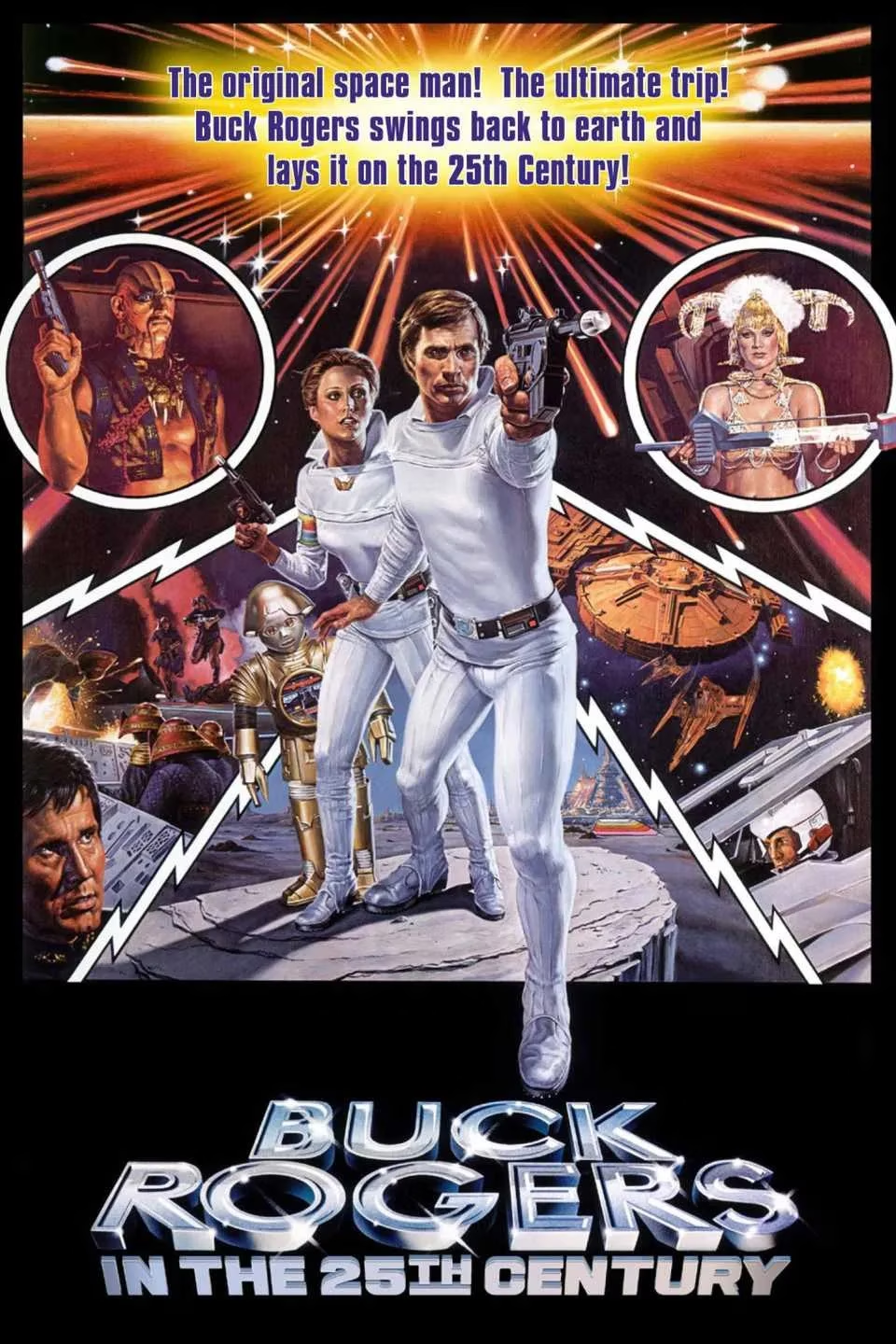
| 1979-1981 | Television Series | Buck Rogers in the 25th Century (NBC). | Rode the post-Star Wars sci-fi wave, starring Gil Gerard. |
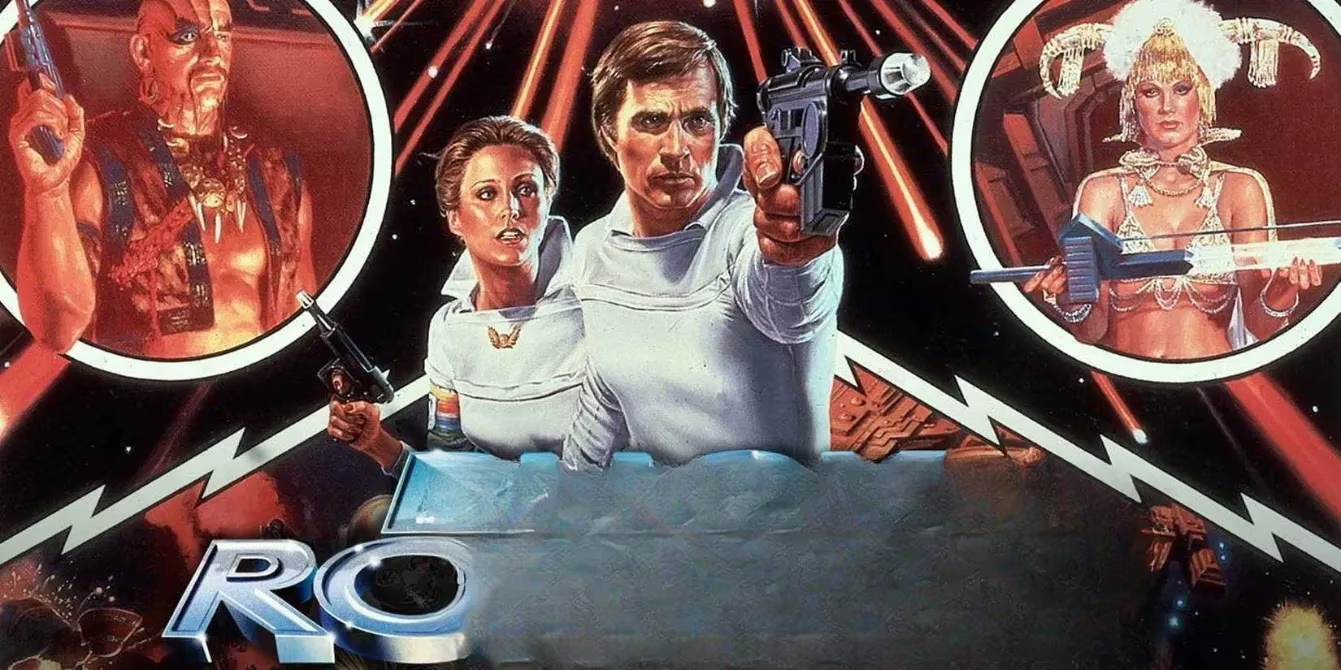
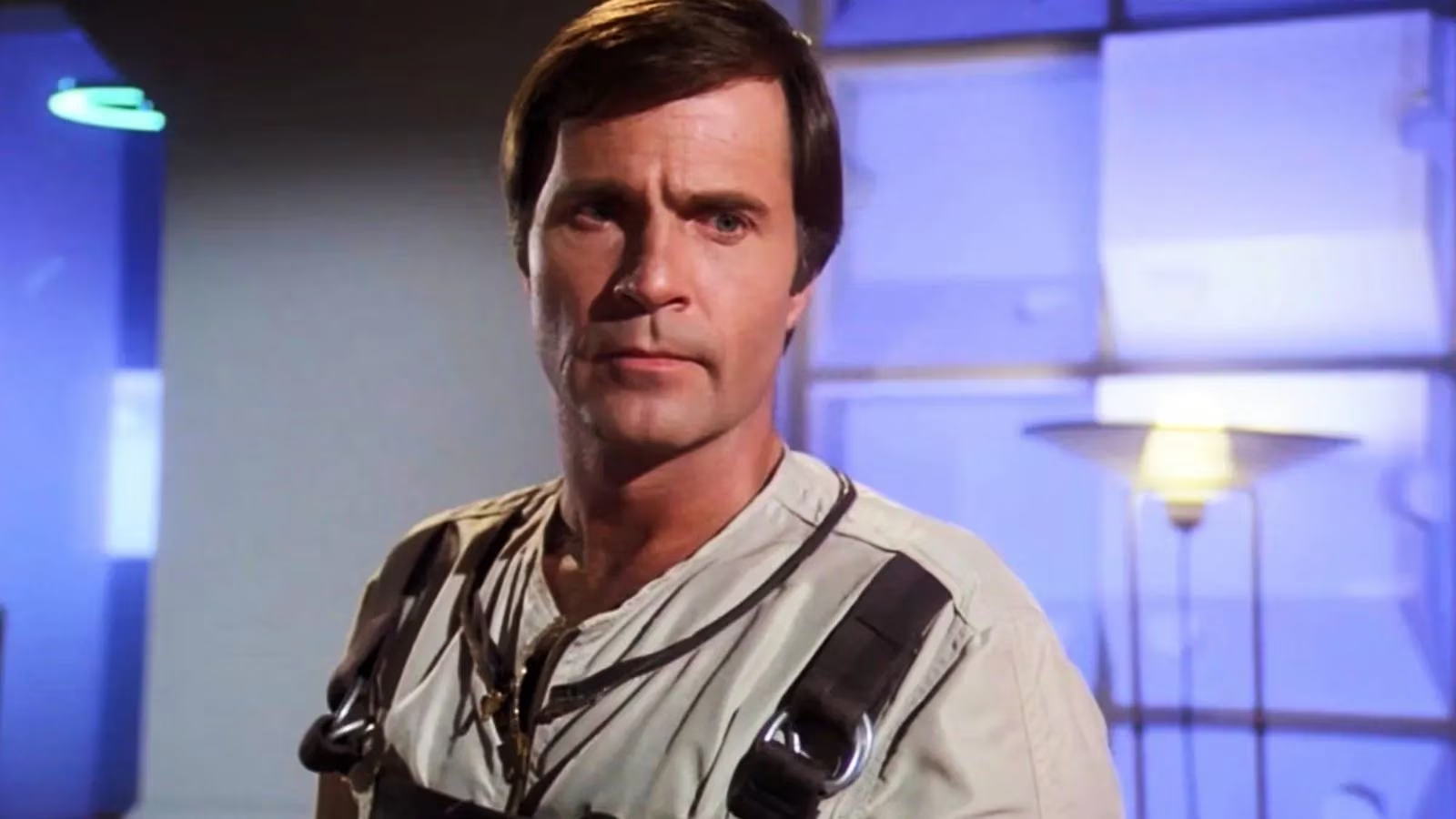
The 1979 TV show, starring the charismatic Gil Gerard and the iconic Erin Gray as Colonel Wilma Deering, was my personal gateway. It was a product of its time—disco-era aesthetics meeting Star Wars ambition—but it captured the spirit. More importantly, Buck Rogers was a merchandising pioneer. Long before action figure aisles were dominated by Jedi and Autobots, kids were playing with Buck Rogers ray guns and plastic rocket ships. The franchise was a commercial ecosystem, proving that a great sci-fi story could be more than just a story; it could be a lifestyle.
Why Now? Why Zeb Wells?
So why resurrect Buck in 2026? The landscape is perfect. We're in an era of both profound technological optimism and deep existential anxiety about the future—precisely the soil where Buck Rogers first took root. The original story dealt with a world rebuilt after catastrophe, with new alliances and terrifying weapons. Sound familiar? A modern take has the potential to explore themes of cultural dislocation, the ethics of advanced technology, and what it means to be a hero when the very definition of humanity has changed.
Enter Zeb Wells. On paper, he might seem like an unconventional choice. An Emmy winner for the brilliantly absurd Robot Chicken and the co-writer of the meta, fourth-wall-smashing Deadpool & Wolverine? But that's exactly what makes him perfect. Wells is a writer who understands genre from the inside out. He knows how to honor the core of a classic character while deftly subverting expectations and injecting a vital, contemporary wit. His work on Marvel's Amazing Spider-Man proves he can handle legacy heroes with both respect and a fresh perspective. His involvement is like handing a master locksmith a centuries-old, intricate mechanism; you trust him not to break it, but to find new, exciting ways to make it tick.
The Legacy Awaiting Its Future
This new film has the chance to do something remarkable: bridge generations. For older fans, it's a return to a foundational myth. For new audiences, it's the discovery of a pristine archetype, free from decades of convoluted continuity. The tools are all there, waiting in Nowlan's original text:
-
The Core Conflict: A man using his "ancient" 20th-century grit and ingenuity to survive and lead in a hyper-advanced world.
-
The Iconography: The jetpack, the ray gun, the sleek spacecraft. These aren't clichés; they're the original blueprints.
-
The Tone: It can be sweeping adventure, pulpy fun, and genuine commentary all at once.
Thinking about this project, I'm reminded of a dormant seed from a prehistoric plant, suddenly finding the right conditions to germinate in a totally new world. Buck Rogers has been in suspended animation within pop culture for a while, but his DNA is everywhere. From the powered armor of Iron Man to the dogfights in Star Wars, his influence is as pervasive and unnoticed as gravity. This revival isn't about nostalgia; it's about reclamation. It's about going back to the source code of sci-fi adventure and rebooting it for a 21st-century audience that still dreams of the stars but views them through a more complex lens.
In the end, Buck's story is the ultimate human story: the struggle to find your place when everything you know is gone. It's about carrying the best of the past into an uncertain future. As we all navigate our own rapidly changing world, maybe we need a guide who's been doing it for nearly a century. Come 2026 and beyond, I'll be waiting, hoping to see Buck Rogers blast off once more, not as a relic, but as a renewed beacon for where we're going. The future he dreamed up is finally here, and it's time for him to wake up and see it.
Industry context is informed by Forbes - Games, whose coverage of franchise strategy and IP monetization helps frame why a legacy sci-fi property like Buck Rogers is being revived now: recognizable brands can de-risk big-budget development while still leaving room for a “back-to-the-source” adaptation that modernizes themes (future shock, technological anxiety, cultural dislocation) without relying solely on nostalgia.
Leave a Comment
Comments