The Emma Stone-led dark sci-fi comedy Bugonia, a 2026 remake of the 2003 South Korean cult classic Save the Green Planet, has captivated audiences and critics alike with its audacious narrative and bleakly comedic tone. Directed by the acclaimed Yorgos Lanthimos, the film follows paranoid conspiracy theorist Teddy (Jesse Plemons) who, with his cousin Don (Aidan Delbis), kidnaps powerful pharmaceutical CEO Michelle (Emma Stone), believing her to be an alien orchestrating Earth's destruction. While the adaptation features notable changes, including gender-swapping key roles, screenwriter Will Tracy reveals that the film's shocking, apocalyptic ending remained sacrosanct, a decision he credits with preserving the story's thematic power and intellectual heft.
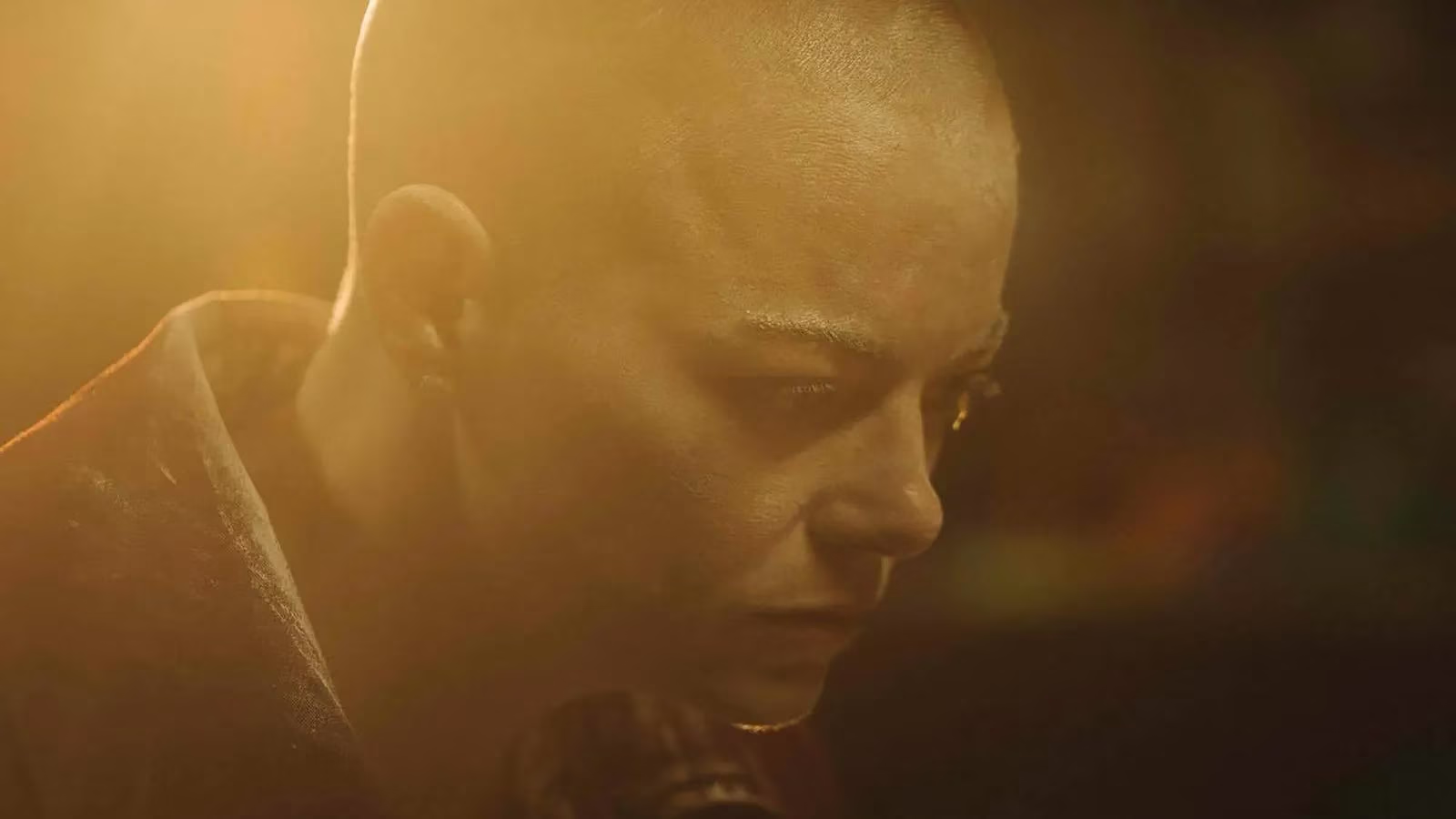
The Unchanged Climax: Why the Alien Reveal Remained
In a recent interview, six-time Emmy winner Will Tracy discussed his approach to adapting Bugonia. When questioned about potentially altering the film's denouement—where Michelle is confirmed as an extraterrestrial who annihilates humanity, deeming it a failed experiment—Tracy admitted to considering a more conventional, psychologically grounded conclusion. "The more perhaps annoyingly clever ending would be, 'Oh, turns out she was just really clever, and it was all in his head,'" Tracy mused. However, he ultimately found that staying true to director Jang Joon-hwan's original, cataclysmic finale felt more authentic and intellectually satisfying. "It feels more like the clever, twisty ending to me," Tracy stated, emphasizing that this choice allowed the narrative to "pull out a bit in those last few moments and widen the scope" of its exploration of grand themes like human existence and planetary stewardship.
Tracy acknowledged the risk involved, calling the ending "a pretty big swing" that relied heavily on the talents of director Lanthimos and the cast. He suggested that in less capable hands, such a bold narrative gamble could have faltered. The fidelity to this climax has been a major point of discussion, with the film's conclusion being interpreted by some as profoundly bleak. Tracy counters this, arguing that the final scene, which depicts an Earth thriving with wildlife in humanity's absence, is not nihilistic but rather constructively open-ended. "What we see in the last few minutes of this movie has not happened, and it allows us to look at a world without us in it," he explained, noting that the sequence prompts reflection on "what would be missing without us for good and for ill."
Adapting for a New Era: From Korean Cult Film to Global Commentary
A primary creative challenge for Tracy was translating the story for a contemporary, primarily American audience over two decades after the original's release. Tracy, who was unfamiliar with Save the Green Planet before producer Ari Aster suggested it, was drawn to the premise's malleability. He saw an opportunity to craft something new that grappled with modern American—and ultimately global—anxieties. "You could take the premise of the original film and make something entirely new that was grappling with contemporary American politics and culture," Tracy noted, though he later came to view the core conflict as a "global problem of disassociation from reality."
He aimed to transform the material into more of a "conversational chamber piece," focusing on escalating tensions and emotional revelations during long dialogues in confined spaces. This shift in structure from the original allowed for a deeper, more verbal excavation of the characters' psyches and the societal fissures they represent.
Purposeful Gender Swaps and Character Evolution
One of the most discussed alterations involves not one, but two gender swaps: transforming the captive CEO and the kidnapper's partner from men into women. Tracy described the initial change for Michelle's character as an almost instinctive creative experiment. "Sometimes it's just a thing that writers do where you have a pancake and are like, 'Well, let's flip over and see what's on the other side,'" he quipped. This simple change, however, unlocked new dramatic dimensions. The dynamic of young men holding a powerful woman captive introduced potent layers of political, sexual, and emotional tension that were absent in the original.
Tracy was particularly intrigued by the idea of a "very powerful woman CEO, who's quite aware of the optics of being a powerful, ostensibly progressive female CEO and knows how to weaponize that." This complexity enriched the verbal sparring matches in the basement, adding a sharp, contemporary edge to the power struggles.
The second swap involved the character of Don, originally the male lead's girlfriend, who became Teddy's cousin. Tracy was inspired by dynamics like Al Pacino and John Cazale in Dog Day Afternoon. He developed Don as the film's emotional core and its voice of reason—someone trying to save his cousin from himself rather than save the planet. Tracy also subtly wrote the character with neurodivergent traits, a facet that was beautifully realized through the casting of first-time actor Aidan Delbis, who identifies as autistic. "Aidan... had this wonderful magnetic quality," Tracy praised, noting Delbis held his own alongside seasoned performers like Stone and Plemons.

Crafting the Pivotal Monologue and Abstract Storytelling
A key turning point in the film is Michelle's lengthy monologue where she reveals the alien conspiracy and humanity's fate. Unlike the original, which used montages and clips, Tracy's script presented this as a straightforward verbal delivery. While there were initial discussions with Lanthimos about how to dramatize it, they ultimately trusted the power of Emma Stone's performance. "Emma Stone doesn't need anything, really," Tracy asserted. "She can completely own that space and inhabit everything that's embedded within that monologue." The scene masterfully manipulates audience expectations, making viewers question the truth of Michelle's claims until the very end.
The film also utilizes distinctive, abstract black-and-white flashbacks to explore Teddy's trauma and relationship with his mother. Tracy credits Lanthimos with elevating these sequences from mere expositional tools. "They are quite abstract, and you're not really sure what's going on," Tracy described. "It's more like the movie's abstract dream of what might've happened." This non-literal approach effectively conveys emotional truth without resorting to clichéd storytelling techniques.
Critical Reception and Awards Buzz
Since its debut at the Venice International Film Festival, Bugonia has been a critical darling, boasting an impressive 87% approval rating on Rotten Tomatoes. As the 2026 awards season heats up, the film is generating significant Oscar buzz. Predictions and analyses suggest strong contention in several major categories:
| Category | Potential Nominee | Current Odds & Buzz |
|---|---|---|
| Best Actress | Emma Stone | Considered a frontrunner for her transformative and chilling performance. |
| Best Actor | Jesse Plemons | Garnering praise for his nuanced portrayal of paranoid conviction. |
| Best Director | Yorgos Lanthimos | Acclaimed for his distinctive visual style and masterful tonal control. |
| Best Adapted Screenplay | Will Tracy | Highly praised for its intelligent, daring, and faithful reimagining. |
| Best Picture | Bugonia | Seen as a strong contender for its unique blend of genre, satire, and philosophy. |
The film's blend of dark humor, philosophical inquiry, and social commentary has cemented its status as one of the most talked-about cinematic releases of 2026.
Looking Forward: Tracy's Future Projects and Directorial Aspirations
When asked about his future following Bugonia, Tracy expressed a desire to branch out, even as he recognizes thematic threads in his past work like Succession (family, power) and The Menu (art, ego). "I'd love to do something that's quite different from anything I've done before," he said, though he admitted his projects often circle themes of power and politics. He has several scripts in development with various directors and harbors ambitions to step behind the camera himself soon.
His time on Lanthimos's set during Bugonia was instrumental in shaping this goal. He admired the director's collaborative, "no a---oles" atmosphere and his commitment to shooting on film. "You pick up things from every director you see working," Tracy noted, indicating that his own directorial style would be informed by these observational experiences.
In conclusion, Bugonia stands as a testament to the power of respectful yet inventive adaptation. By preserving the original's devastating ending while recontextualizing its characters and conflicts for a new era, Will Tracy and Yorgos Lanthimos have crafted a film that is both a gripping thriller and a profound meditation on humanity's place in the cosmos. Its critical and awards success in 2026 underscores its impact, proving that stories about our deepest fears and follies remain perennially relevant.
Leave a Comment
Comments