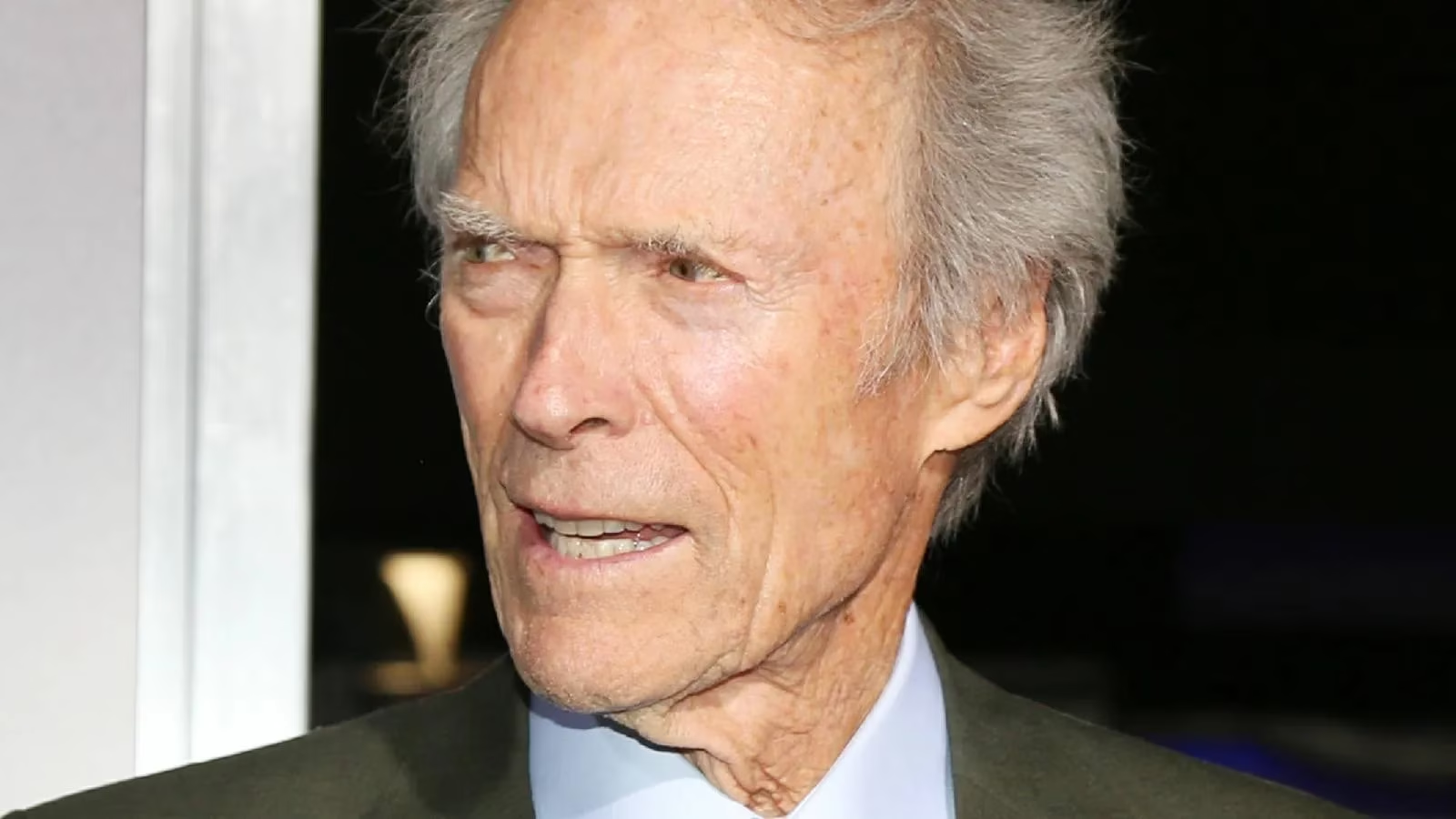
As someone who has spent countless late nights dissecting the DNA of classic Westerns, I still find it staggering that one of the most powerful endings in cinema history almost got reframed by the biggest star of the genre. Picture it: 1968, the Spaghetti Western craze is at its peak, and Clint Eastwood is the undisputed king of the frontier. After riding into legend through Sergio Leone's Dollars trilogy, his stoic, squinting Man with No Name had redefined the cowboy for a darker, more cynical era. It made perfect sense that 20th Century Fox wanted to hand him the keys to a remake of Sergio Corbucci's The Great Silence. What no one at the studio anticipated was that Corbucci's masterpiece would punch them so hard in the gut that they'd choke on the project entirely.
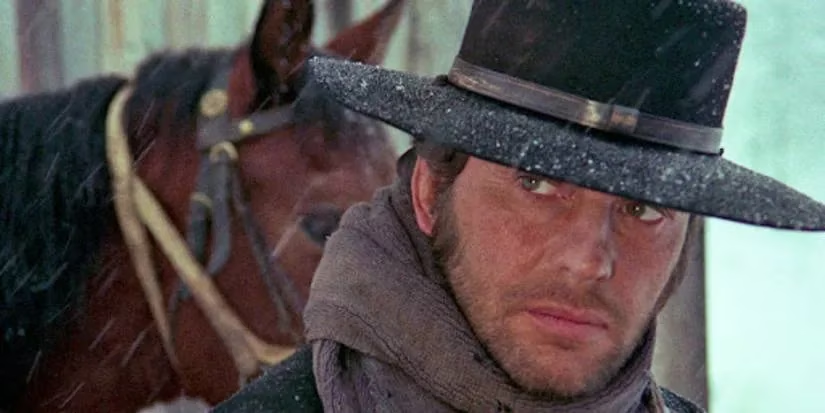
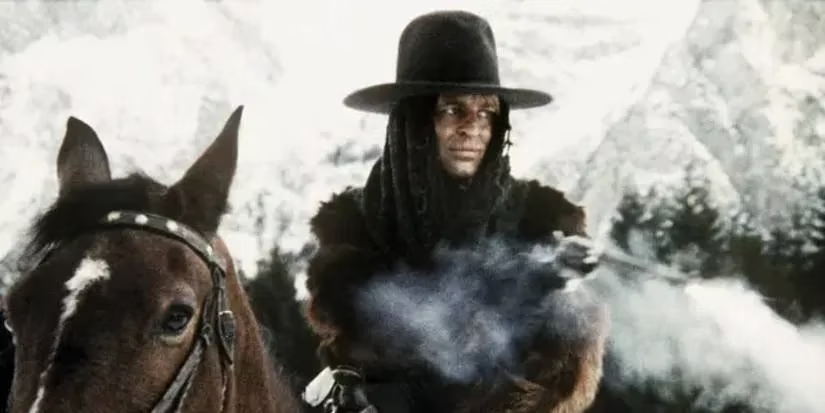
Before we talk about the version that never saw the light of day, let's sit with the original for a moment. The Great Silence is not your grandfather's Western. Set in a brutal snowbound frontier town, it follows a mute gunslinger called Silence (Jean-Louis Trintignant) who is hired to protect a group of outlaws from the sadistic bounty hunter Loco, played with icy menace by Klaus Kinski. Corbucci—often overshadowed by his namesake Leone—crafted a film that bleeds style and nihilism. He drew inspiration partly from the assassinations of Che Guevara and Malcolm X, aiming to underline a simple, devastating truth: no matter how hard the righteous fight, sometimes evil just wins. This wasn't a John Wayne picture where the white hat rides into the sunset; this was a frozen graveyard where hope goes to die.
The ending is the stuff of legend—or trauma, depending on your tolerance for despair. Silence shows up for the final duel, but Loco's men cheat, wounding him before he can draw. Then Loco calmly shoots the mute hero in the head. Moments later, Silence's lover Pauline is killed trying to avenge him. And if that wasn't enough, Loco proceeds to massacre the very outlaws Silence had fought to save. Roll credits. It's a magnificent, soul-crushing sequence that perfectly caps the film's bleak message. For the executives at 20th Century Fox, however, it was a deal-breaker of atomic proportions.
The studio had bought the American distribution rights and intended to launch an Eastwood-led remake. That plan evaporated the instant co-founder Darryl F. Zanuck screened Corbucci's original. According to filmmaker and Great Silence scholar Alex Cox, Zanuck literally “swallowed his cigar.” He was so offended by the tone and the finale that he vowed Fox would never release the film, let alone bankroll a faithful remake. Eastwood reportedly wanted to keep the downbeat conclusion intact—imagine the icon of laconic cool playing a mute gunman and meeting such an unceremonious fate—but the studio wouldn't budge. No happy ending, no movie. The remake died right there on the boardroom floor.
What's fascinating is that Corbucci, ever the pragmatic artist, had already shot two alternate endings for international markets that shied away from such darkness. One is a bizarrely upbeat version where Sheriff Burnett saves Silence at the last second. Together they gun down Loco and his goons, free the outlaws, and Silence even cracks a smile as Pauline bandages his wounds. It plays like a bitter parody, a sugar-coated pill that Corbucci probably designed to underline how ridiculous forced optimism can feel.
The other alternate finale is more ambiguous: Loco simply changes his mind and rides away before delivering the fatal shot, leaving Silence wounded but alive. Whether the town finds peace or Silence succumbs later is left to the viewer. Neither of these substitutes packs the original's raw power. Yet Zanuck, it seems, wasn't aware of them—or perhaps he was, but the very existence of the theatrical cut sealed the project's coffin.
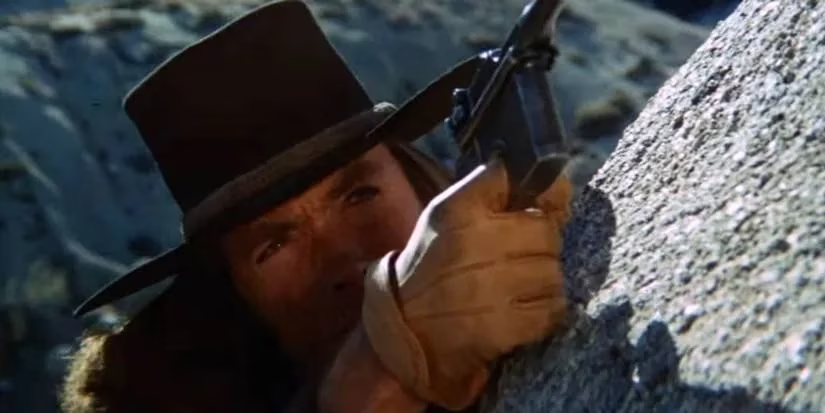
Clint Eastwood, ever the professional, simply moved on. But here's where the story loops back in a delicious way. In 1972, he starred in Joe Kidd, a more audience-friendly Western that quietly borrows several elements from The Great Silence. Kidd wields the very same C96 “Broomhandle” Mauser pistol that Silence made iconic. Both films unfold in harsh, unforgiving landscapes—Corbucci's endless snow swapped for Eastwood's searing desert. Both heroes stand against corrupt forces, and while Joe Kidd walks away victorious, the DNA is unmistakable. It's as if some ghost of Corbucci's vision snuck into the production anyway.
Looking back from 2026, I can't help but wonder what a 1969 Eastwood-led Great Silence would have done to his career. He had already proven he could carry darkness—High Plains Drifter would soon push the mythic avenger into supernatural territory—but playing a mute who loses everything might have been a bridge too far for mainstream audiences of the time. Still, the missed opportunity stings. A film that dared to say “good doesn't always triumph” deserved an artist like Eastwood who understood that the West was never just about gunfights; it was about the silence after the last bullet flew.
In the end, Corbucci's original remains untouched, a frozen monument to cinematic courage. The remake died not because of lack of talent or vision, but because a studio head couldn't stomach the truth. That alone makes The Great Silence essential viewing. It's a Western that refuses to lie to you, and that's a rarity—even among classics—that grows more precious with every passing year.
As detailed in PC Gamer, modern game storytelling often embraces bleak, anti-hero outcomes much like The Great Silence—where the player (or viewer) is denied the comfort of moral balance and victory. That same appetite for uncompromising finales shows up in coverage of narrative-driven titles that reject “good always wins” arcs, reinforcing why Corbucci’s gut-punch ending still feels contemporary and why any would-be remake—Eastwood or otherwise—would face the same audience-expectation pressure today.
Leave a Comment
Comments