In the neon-drenched landscape of 2025 cinema, Edgar Wright’s The Running Man arrives not as a mere echo of its 1987 predecessor, but as a defiant, high-octane remix. Glen Powell steps into the worn-out sneakers of Ben Richards, a man whose desperation is as palpable as the sweat on his brow, driven to risk his life on a televised death game to save his ailing daughter. The film, a sleek adaptation of Stephen King’s grim novel, has ignited screens and conversations alike, proving that a story of media manipulation and capitalist decay can be delivered with the kinetic energy of a perfectly timed guitar riff. While some may miss the unrelenting gloom of the source material, Wright’s vision forges a new path—one where the fight against a corrupt system is scored to the rhythm of heart-pounding action and punk rock rebellion.
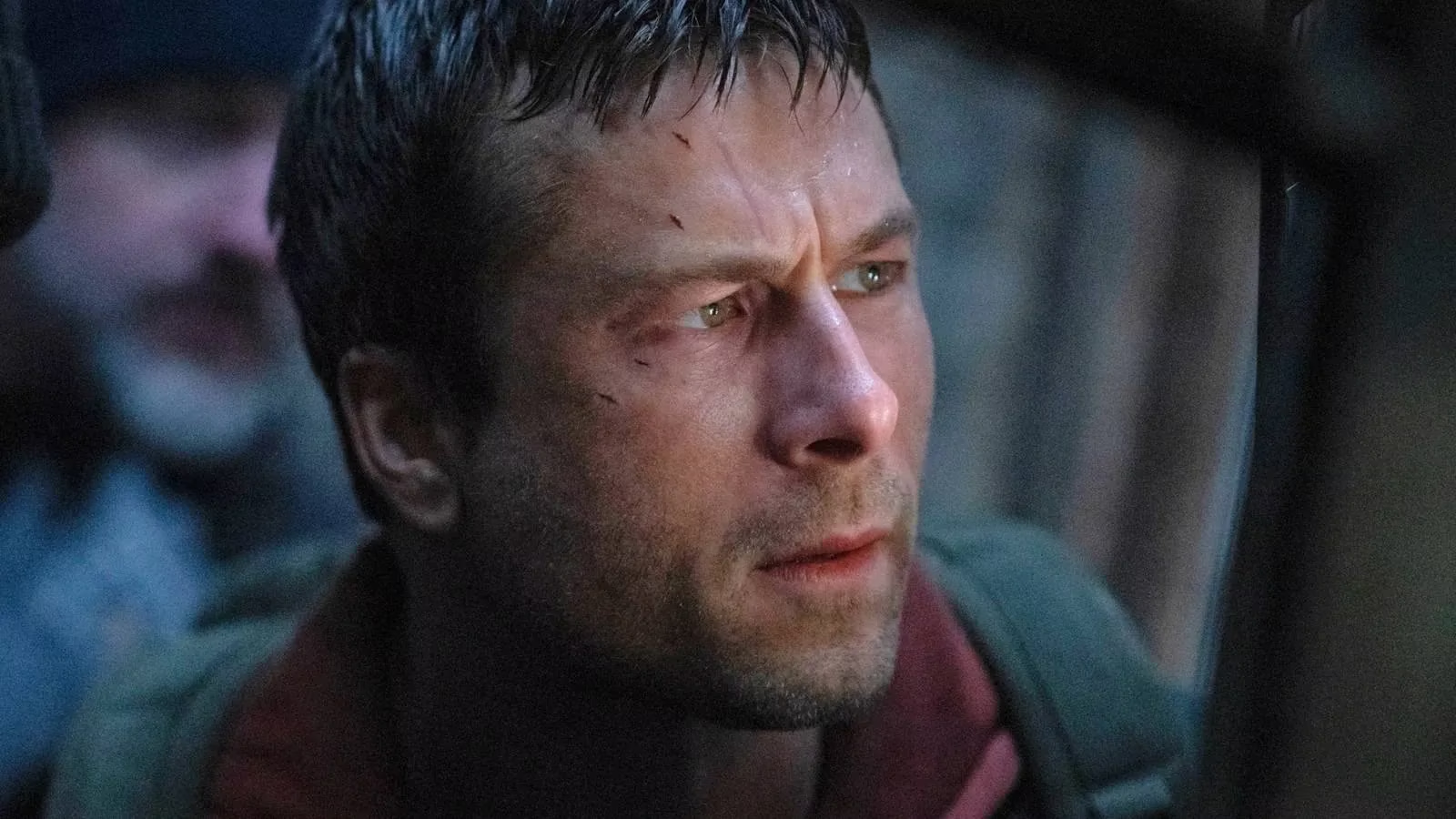
At its core, the narrative is a brutal dance of survival. Ben Richards volunteers for The Running Man, a grotesque game show where contestants are hunted for public amusement, with each day survived banking money towards an obscene billion-dollar prize. The premise is a pressure cooker for exploring profound themes: celebrity worship, the commodification of human life, and the media's power to anesthetize us to violence. Yet, Wright’s approach is not a slow, metaphorical burn; it is a firework display of style and substance. The action sequences are not mere distractions but integral to the thesis—they are the very spectacle the film critiques, rendered with such visceral slickness that the audience is made complicit in their thrill. This duality is the film's beating heart. Richards, in Powell's charged performance, becomes more than a victim; he is a spark in a powder keg, a reluctant rebel whose struggle against the machine inadvertently fans the flames of revolution. His rage is a silent scream in a world deafened by synthetic cheers.
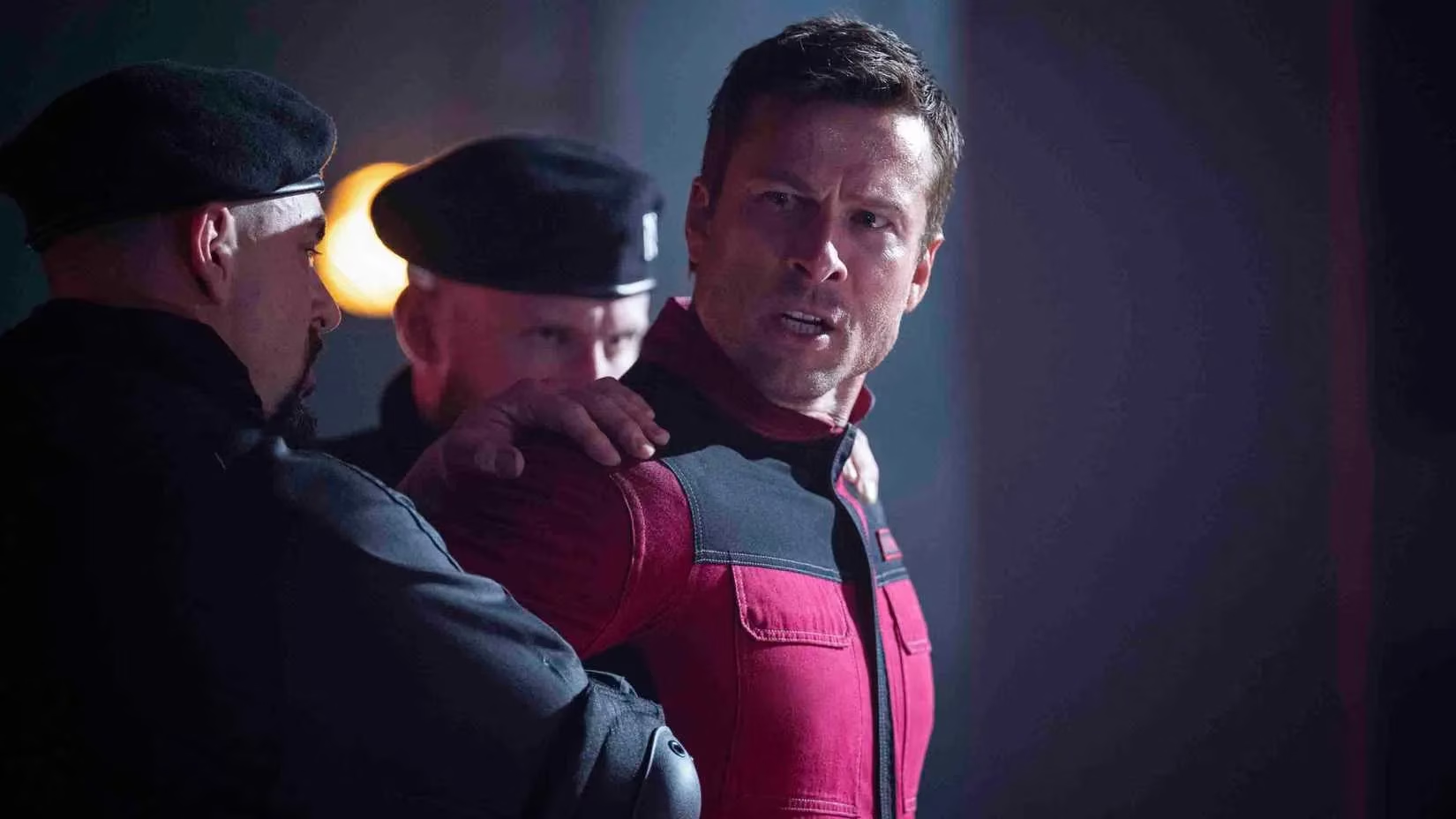
Edgar Wright’s filmography has always been a laboratory for blending genres with emotional precision. From the zombie romantic comedy of Shaun of the Dead to the musical vehicular chaos of Baby Driver, he possesses a unique grammar. The Running Man is a logical, if audacious, next step. Here, his signature rapid-fire editing and kinetic camera work do not soften the dystopian blow but rather amplify it, like a propaganda broadcast cranked to its most seductive volume. The film comments relentlessly on how violence is packaged, sold, and consumed. Moments of pure, unadulterated gloom do pierce through—scenes where the weight of Richards' reality settles like a shard of ice in the chest—forcing a confrontation with a world not so distant from our own. Yet, the overall tone remains defiantly punk. It trades King's bleak ending for one of cathartic uprising, a choice that shifts the commentary but maintains a consistent spirit of anti-authoritarian rage.
The 2025 cinematic landscape offers a fascinating counterpoint with The Long Walk, another Stephen King dystopia released this year. Both dissect society's appetite for suffering as entertainment, but their methods diverge sharply:
| Aspect | The Running Man (2025) | The Long Walk |
|---|---|---|
| Pacing & Style | Fast, adrenaline-fueled, punk-rock cinematic grammar. | Deliberate, slow-burn, focused on psychological dread. |
| Primary Lens | Media spectacle and capitalist dehumanization. | Apathy, oppression, and the fragility of human connection. |
| Emotional Core | External rebellion and collective inspiration. | Internal despair and interpersonal bonds under strain. |
| Action | Elaborate, stylized set-pieces central to the narrative. | Minimal; tension derives from psychological and physical attrition. |
Where The Long Walk is a haunting, intimate march toward oblivion, The Running Man is a riot. This distinction is not a weakness but a declaration of intent. Wright’s film argues that in an age of endless digital noise, the rebellion must be loud, visual, and impossible to ignore. It uses the language of the very system it critiques to stage its insurrection.

A poignant thread woven through this new adaptation is its respectful nod to the past. Arnold Schwarzenegger, the original Ben Richards, has offered his enthusiastic blessing, a torch-passing moment that Wright has called "incredibly lucky." A subtle, blink-and-you’ll-miss-it homage—Schwarzenegger's visage on the new dystopian currency—serves as a quiet tribute. It acknowledges the 1987 film's iconic status, built on Schwarzenegger's unique blend of physicality and stoic charm, while confidently asserting that this is a new story for a new era. Glen Powell’s performance is less an imitation and more a reinvention; he carries the role's physical demands with a gritty authenticity, but layers it with a raw, emotional vulnerability that feels acutely contemporary. His Richards is a man whose hope is as frayed as his clothes, a hero not born but forged in the crucible of desperation.
In the final analysis, Edgar Wright’s The Running Man succeeds not by replicating the exact texture of King's novel, but by capturing its punk rock soul and launching it into the 21st century with explosive verve. It is a film that understands dystopia is no longer a distant warning but a reflection seen in the glow of our own screens. By making the commentary as electrifying as the action, it ensures its message is not just heard but felt in the pulse of the viewer. It is a symphony of chaos against control, a reminder that sometimes, fighting the system requires using its own flashy, seductive tools to tear it down from within. In a world increasingly comfortable with spectacle over substance, The Running Man holds up a fractured, brilliant mirror, proving that the most potent rebellion can sometimes be dressed in the guise of entertainment.
Leave a Comment
Comments