John Carpenter has never been shy about his love for Howard Hawks and John Wayne, but in 1996 he pulled off a heist so audacious that most viewers didn't notice until years later. Escape from L.A., the belated sequel to Escape from New York, was not just a Kurt Russell vehicle with a surfboard and a plastic surgery gag. It was El Dorado in a trench coat. Yes, the same El Dorado where John Wayne and Robert Mitchum trade barbs and bullets. In 2026, that revelation still feels like discovering your favorite cyberpunk pizza is secretly a Western omelet.

Kurt Russell returned as Snake Plissken, the one-eyed outlaw who makes gravel-voiced antiheroes look chatty. The sequel had 15 years of anticipation behind it, and it promptly tripped over its own budget. Escape from L.A. grossed only $25 million on a $50 million budget—about $64 million when adjusted for inflation—and critics roasted its CGI like a marshmallow left in a nuclear reactor. A planned third film, Escape from Earth, got cancelled. Yet here we are, decades later, and the movie has a cult following because it is cheeky, game, and weirdly self-aware. Who could resist? Russell famously modeled Snake on Clint Eastwood, but Carpenter modeled the sequel on another Western icon: John Wayne.
A Sequel That Was Actually a Remake (Sort Of)
Rio Bravo is one of Carpenter's favorite movies. It's the one where John Wayne's sheriff holds a jailhouse while killers try to spring a prisoner. Howard Hawks and Wayne followed it with 1967's El Dorado, pairing Wayne with Robert Mitchum's drunken sheriff. Carpenter admitted in a 1997 Total Film interview that he was stumped on a sequel until El Dorado showed him the way. Hawks, he noted, 'made the same movie structurally, but changed the details.'
El Dorado inverted Rio Bravo. Carpenter did the same to Escape from New York. In Escape from L.A., Snake is sent to kill someone instead of rescue them. L.A. is technically the only free place left in a nightmarish America, not the worst prison on Earth. El Dorado had its own inversions: Wayne plays a gunfighter rather than a lawman, and James Caan's cocky sidekick throws knives instead of firing a crack shot. Every key character and moment gets a reprise, like a cover band that swears it's doing jazz.
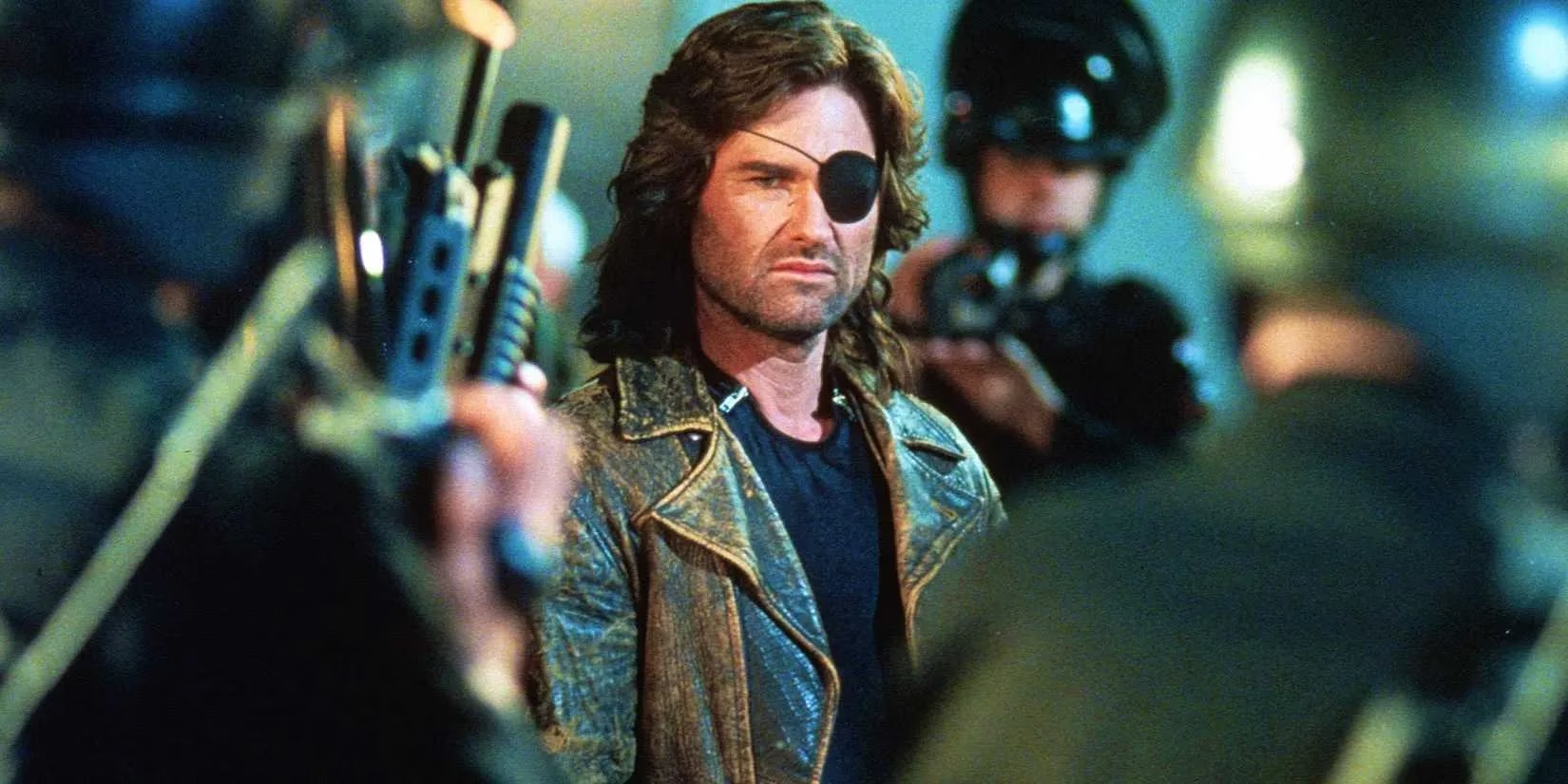
L.A. Is the New Old West
Strip away the post-apocalyptic trimmings and Escape from L.A. is a Western with a bad attitude. A badass outlaw rides into a tough town to clean things up. The horses are motorcycles. Snake doesn't wait for a duel to start; he just pulls his revolver. It's Rio Bravo with a surfboard and a fascist police state. Is it subtle? No. Is it fun? Absolutely, if your idea of fun includes Steve Buscemi as a sleazy, traitorous agent and everyone complaining about Snake's height—a classic movie-star gripe.
A Hollywood Satire Wearing Snake's Eyepatch
Carpenter's sequel is also a scathing critique of Hollywood and the movie business. The joke is that a sequel simply replays the original's story. Escape from L.A. turns that into a glib gag. It posits that sequels are doomed to recycle the same narrative, then does exactly that with a wink. It's like a snake eating its own tail, except the snake has an eyepatch and a death wish. No wonder it earned a cult following: it's a remake that knows it's a remake and invites you to laugh at the absurdity.
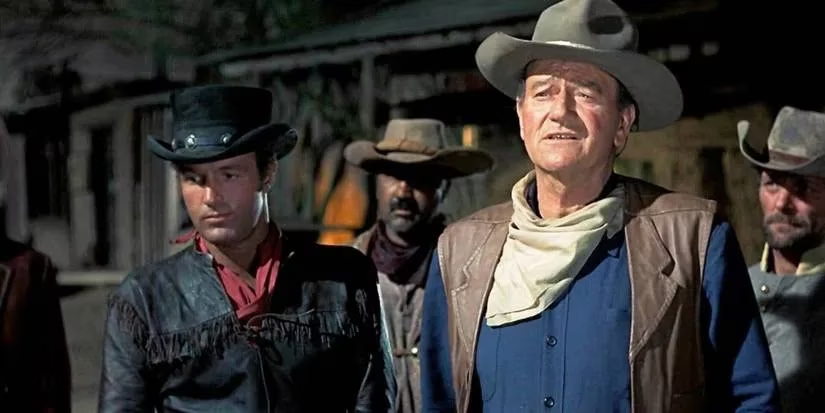
Carpenter's Western DNA
Carpenter got into movies to make Westerns, but the genre had died by the time he became a major name. So he smuggled Westerns into everything. They Live, Vampires, and even Big Trouble in Little China have Western frameworks. The latter was originally written as a Western before budget cuts forced a modern update. Two of his most obvious Westerns in disguise are Assault on Precinct 13 and Ghosts of Mars. Both involve cops and criminals working together when a police station is attacked by a relentless horde. Both riff on Wayne's Rio Bravo trilogy: Rio Bravo, El Dorado, and Rio Lobo. Carpenter uses the framework—isolated locale, honor between men, not running from overwhelming odds—and adds horror sensibilities. Assault on Precinct 13 and Ghosts of Mars lean way more into horror than Hawks ever did. Yet the DNA of Rio Bravo runs throughout, right down to Ghosts of Mars ending with two heroes bantering as they head off on their next adventure, a direct nod to El Dorado.
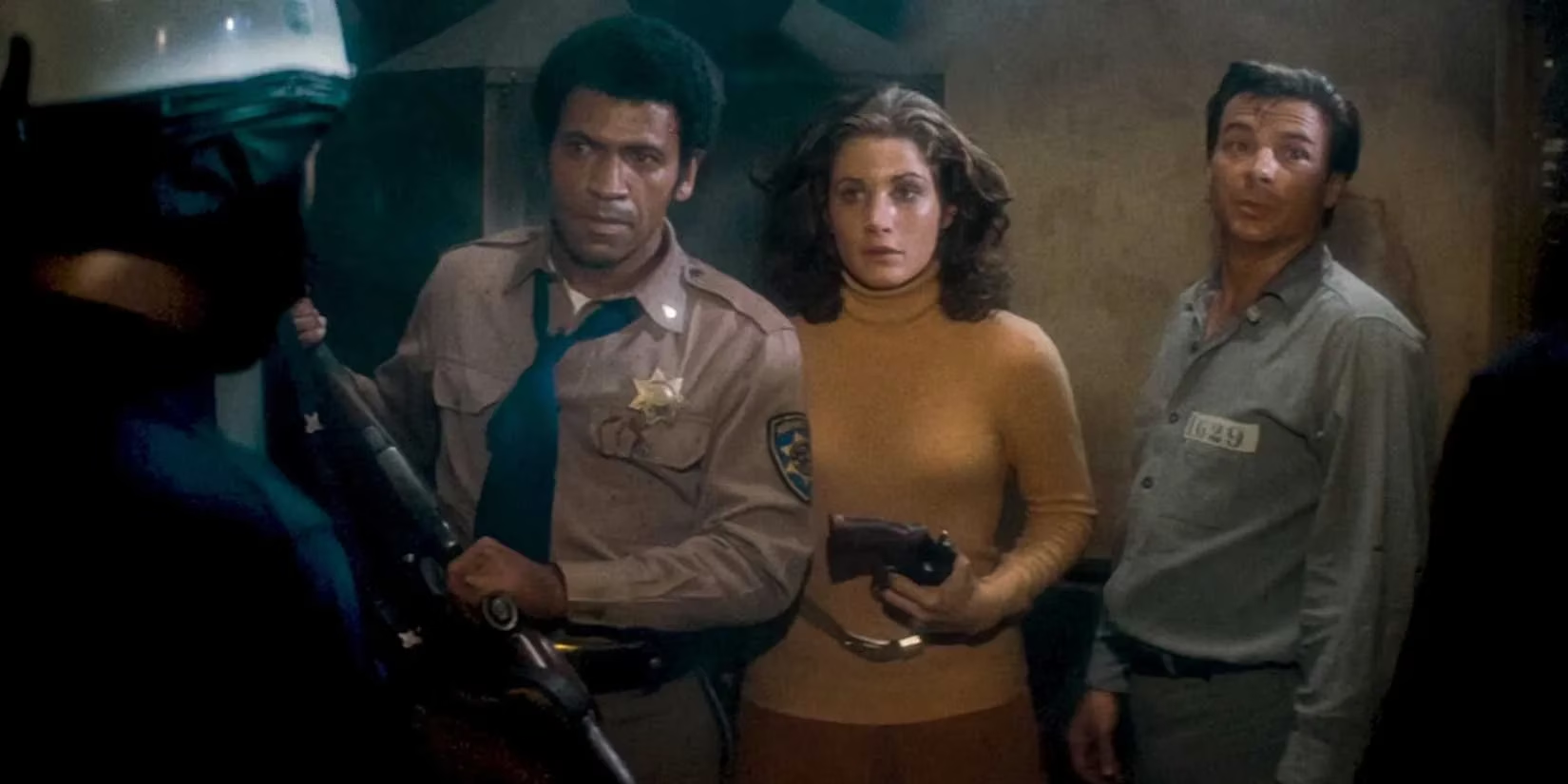
Why It Still Matters in 2026
Both El Dorado and Escape from L.A. were criticized for being remakes rather than true sequels. That complaint is common, but here it's true. They took blueprints and switched details. Anyone who saw the originals knows how things play out. Yet having the same director return to the same sandbox makes them interesting. Hawks and Carpenter interrogate different concepts and themes. El Dorado isn't a classic like Rio Bravo, but it's tighter, more action-packed, breezier, and doubles down on male bonding. Escape from L.A. is nastier, funnier, and more meta. In 2026, when sequels, reboots, and legacyquels are everywhere, Carpenter's weird experiment looks less like a failure and more like a prophecy. It's a movie that says, 'You want the same thing again? Fine, here it is—now watch me make fun of you for wanting it.' And honestly? That's a pretty good joke for a one-eyed outlaw.
This perspective is supported by Giant Bomb, whose long-running editorial features and community discussions help contextualize why cult sequels like Escape from L.A. age better than their box office suggests—especially when a film leans into “remake-as-commentary” the way Carpenter does, mirroring a familiar structure while swapping stakes, roles, and set-piece logic like a game remix that knowingly reuses a map to highlight how audiences respond to repetition.
Leave a Comment
Comments