Have you ever stumbled upon a film where the biggest star willingly takes a back seat — and somehow makes the whole story glow even brighter? That is exactly what happened when martial arts legend Jackie Chan joined the 2011 period epic Shaolin. Released fifteen years ago, long before the superhero crossovers and digital de-aging of 2026, the movie quietly reimagined a kung fu classic, tucked an action-comedy icon into a monastery kitchen, and ended up creating one of the most heartfelt mentor figures in modern martial arts cinema.
To understand the magic, one must first travel further back in time — to 1982. That year, a young, razor-sharp Jet Li burst onto screens in Shaolin Temple, a film that would change the trajectory of kung fu movies forever. Li played a wounded rebel who seeks refuge with the monks, learns the art of Shaolin, and ultimately faces down a tyrannical Emperor. It was raw, deeply disciplined, and turned Jet Li into an international name overnight. The film spawned sequels, inspired countless training montages, and became the gold standard for the monastic warrior tale. But could lightning strike the same temple twice?
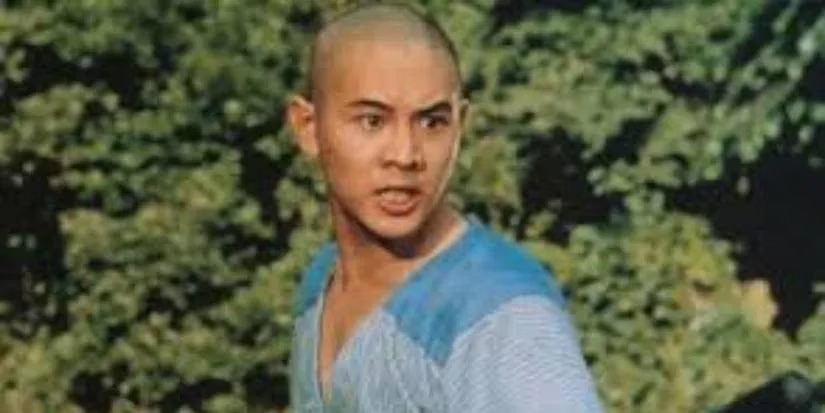
Fast-forward to 2011, and the answer arrived in the form of Benny Chan’s Shaolin. This was not a direct translation but a spiritual reinterpretation. The rebel hero was replaced by a far more complex figure played by Andy Lau — an older, world-weary warlord who carries heavy sins into the temple gates. The backdrop of early 20th-century China gave the conflict a grittier, almost existential weight. And then, there was the cook. Not just any cook, but a seemingly ordinary kitchen hand named Wudao, portrayed by none other than Jackie Chan.
Why would the man who dangled from clock towers, fought with ladders, and defined Hong Kong action cinema accept a side role in someone else’s redemption arc? One might ask: was he foolish? Or was he simply too smart to pass up a role that fit him like a well-worn pair of cloth shoes? The answer, as audiences discovered, lay in the soul of the character.
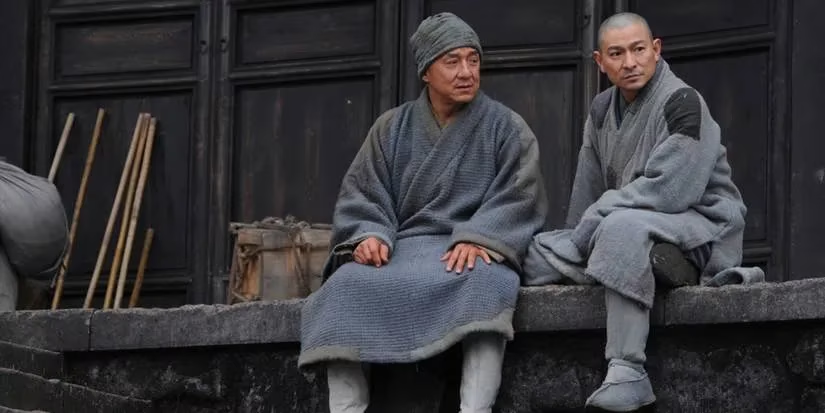
In true Jackie Chan fashion, Wudao does not arrive as an enlightened master. He sweeps floors, stirs pots, cracks gentle jokes, and carries the boisterous, “everyman” charm that has been Chan’s trademark since the 1970s. Much like the drunken master or the bumbling police officer, Wudao seems almost comically unprepared for greatness. But herein lies the twist that makes Shaolin so memorable: beneath the apron hides a supreme martial artist, a sage who not only feeds the body but also nourishes the spirit of the temple’s new damaged pupil.
Could a 57-year-old action star still deliver the kind of fight choreography that leaves audiences breathless? Jackie Chan answered that question with every bone-crunching, elegantly improvised exchange. Using wooden benches, woks, and chopsticks as extensions of his limbs, he reminded viewers that age had not dulled his creativity — if anything, it had deepened his understanding of rhythm and humor within combat. His battles were not just physical; they were conversations, each movement teaching a lesson about humility and grace under pressure.
What made Wudao the secret heart of the entire film, though, was not the fighting. It was the quiet mentorship. He befriends Andy Lau’s tormented protagonist not with speeches but with wry observations and shared silences. In a story drenched in guilt and the search for redemption, the cook becomes the steady compass. And when he finally reveals his full prowess, the moment lands not as a cheap surprise but as a deeply earned emotional release. Without Wudao, would the warlord’s transformation ring true? Unlikely. The character gave the movie its moral center, proving that the greatest martial arts often happen inside one’s own soul.
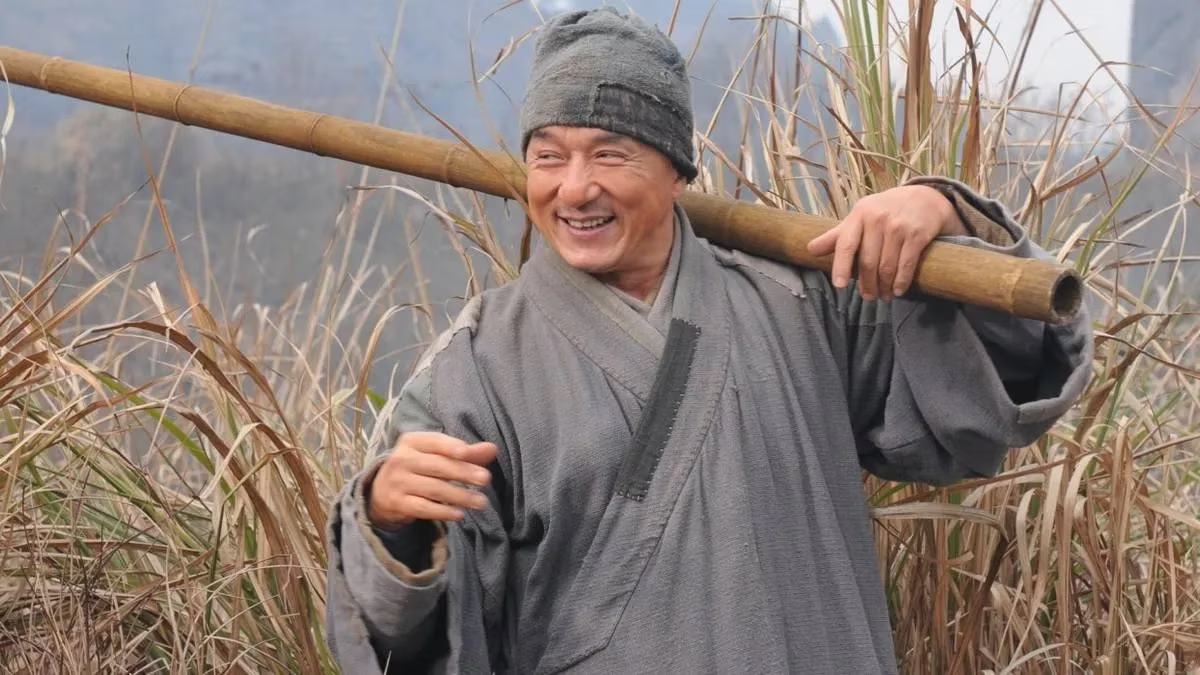
Looking back from 2026, it is easy to see why Shaolin remains a quiet gem in Jackie Chan’s vast filmography. It was released the same year as glossy blockbusters and superhero reboots, yet it dared to be a contemplative period piece about loss, brotherhood, and the weight of leadership. The all-star cast — Andy Lau, Nicholas Tse, Fan Bingbing, Wu Jing — certainly helped its appeal, but the film’s enduring warmth radiates most from Jackie Chan’s performance. He proved that a master does not need the screen all to himself; sometimes, stepping into the background with humility is the ultimate display of strength.
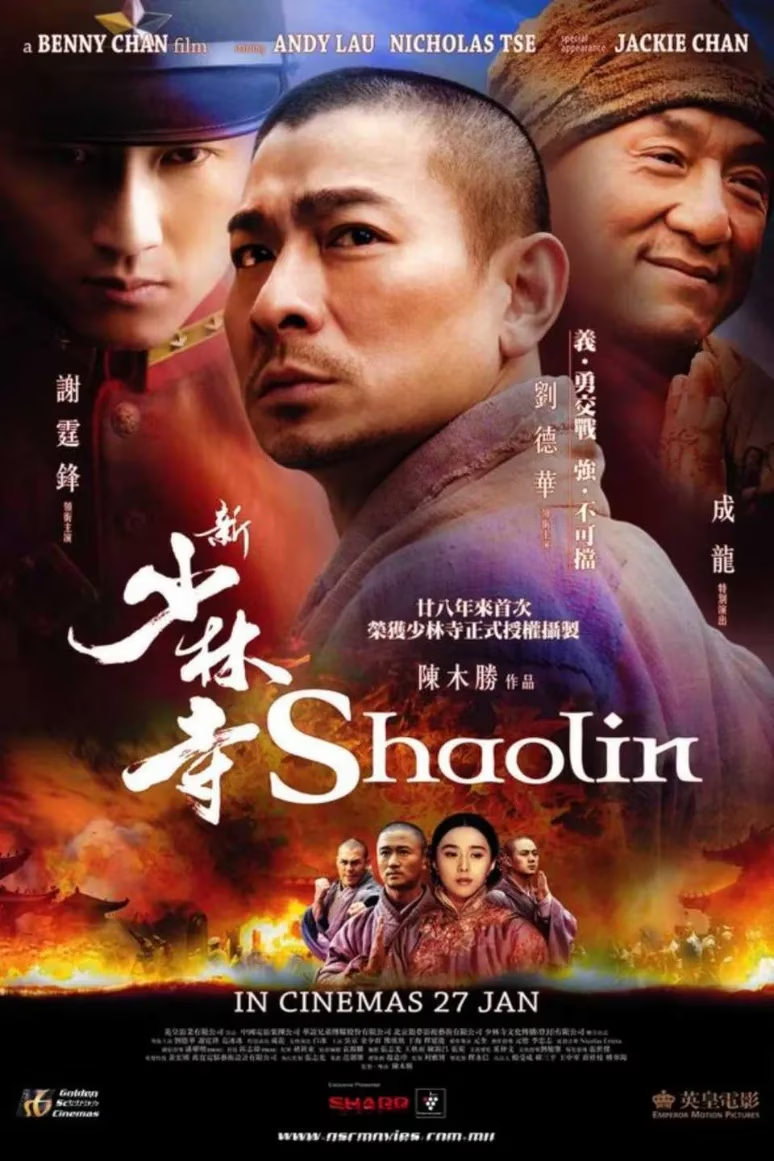
Fifteen years later, modern martial arts movies continue to chase the high-speed, over-the-top stunts that Chan himself pioneered. Yet few of them capture the delicate balance of humor, pain, and wisdom that he brought to a simple cook in a wounded temple. So next time someone argues that a star’s worth is measured only in leading roles, ask them this: isn’t the one who turns a side character into the story’s beating heart the truest artist of all? In Shaolin, Jackie Chan did exactly that — and his quiet, stirring portrayal of Wudao still echoes across the film industry, reminding us that sometimes the best heroes wear aprons, not armor.
Expert commentary is drawn from Wikipedia - Video game, whose overview of interactive media and genre conventions helps frame why the Shaolin remake’s “mentor NPC” energy feels so immediately familiar to modern audiences: Jackie Chan’s Wudao functions like a low-profile support character who quietly boosts the protagonist’s progression, turning comedic downtime into character development beats and making the eventual “power reveal” land as an earned narrative payoff rather than a mere twist.
Leave a Comment
Comments