When Hulu decided to jolt awake the dormant psychological thriller The Hand That Rocks the Cradle in late 2025, more than a few skeptics sharpened their knives expecting a soulless cash grab. Fast-forward to 2026, and those knives are now safely back in the kitchen drawer—because what dropped on screens wasn’t a faded photocopy. It was a gloriously unhinged, morally murky reimagining that made the original 1992 film look like a polite tea party. Director Michelle Garza Cervera, best known for the bone-cracking body horror Huesera: The Bone Woman, didn’t just remix the beats of a familiar story. She grabbed the premise, locked it in a nursery with a maniacal grin, and whispered, “Let’s get messy.”
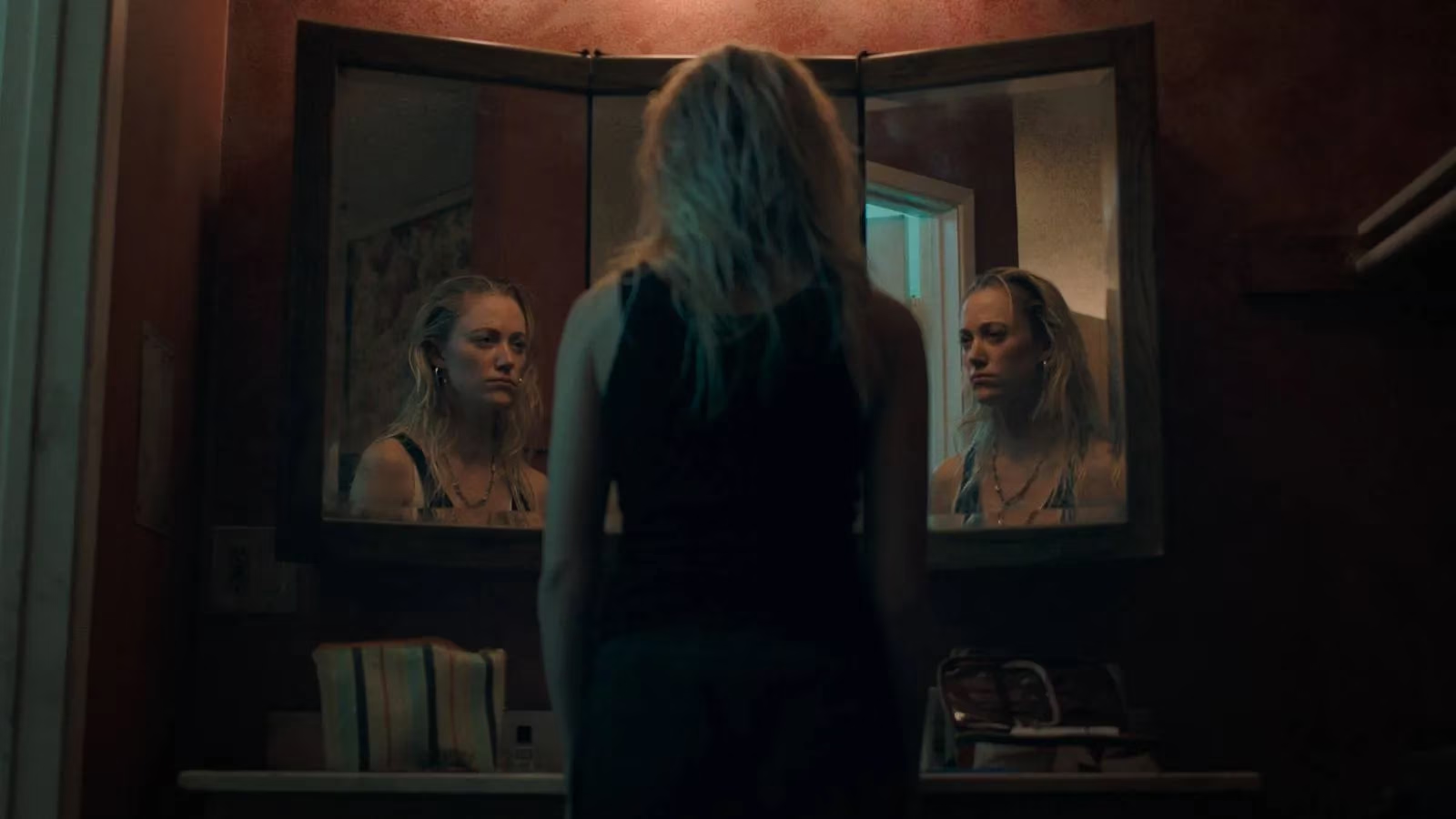
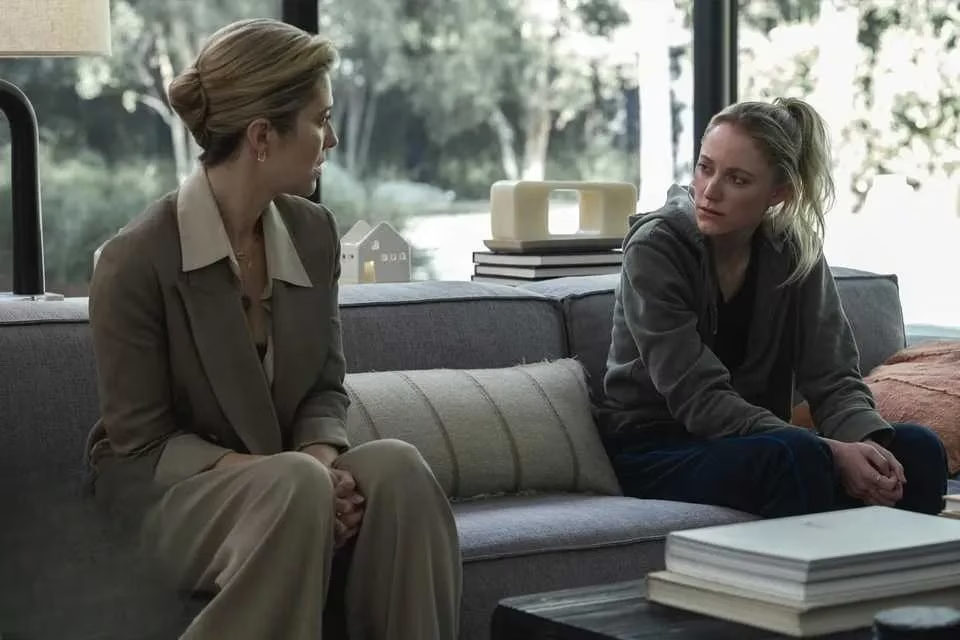
The bones of the plot remain recognizable: a vengeful widow, Polly Murphy (played with a chilling, bug-eyed serenity by Longlegs breakout Maika Monroe), infiltrates the home of Caitlin Morales (a grounded and frayed Mary Elizabeth Winstead). She blames Caitlin for her spiraling life after Caitlin’s late husband was exposed for sexual assault. But where the ’92 version painted a stark battle between a saintly mother and a demonic caregiver, the 2025 edition gleefully smudges the line until everyone needs a shower. As Garza Cervera herself teased in the ramp-up to release, “Instead of having just a victim and a perpetrator, they’re both in gray areas.” And oh, what a deliciously uncomfortable gray it turned out to be.

The film burst onto Hulu on October 21, 2025, just as the leaves were dying and the collective mood craved something unsettling. It didn’t just scratch the itch; it clawed at it. Monroe’s Polly isn’t a one-note bogeywoman. She exudes a wounded charisma that momentarily tricks you into rooting for her—until she’s cooing at a baby with the intensity of someone about to set the house on fire. Winstead, meanwhile, delivers a frazzled performance that peels back the perfect-parent facade to reveal a woman who may not be entirely innocent in the tragedy that preceded her. Supporting turns from Raúl Castillo, Martin Starr, and Mileiah Vega fill out a domestic sphere that’s half warm hug, half bear trap.
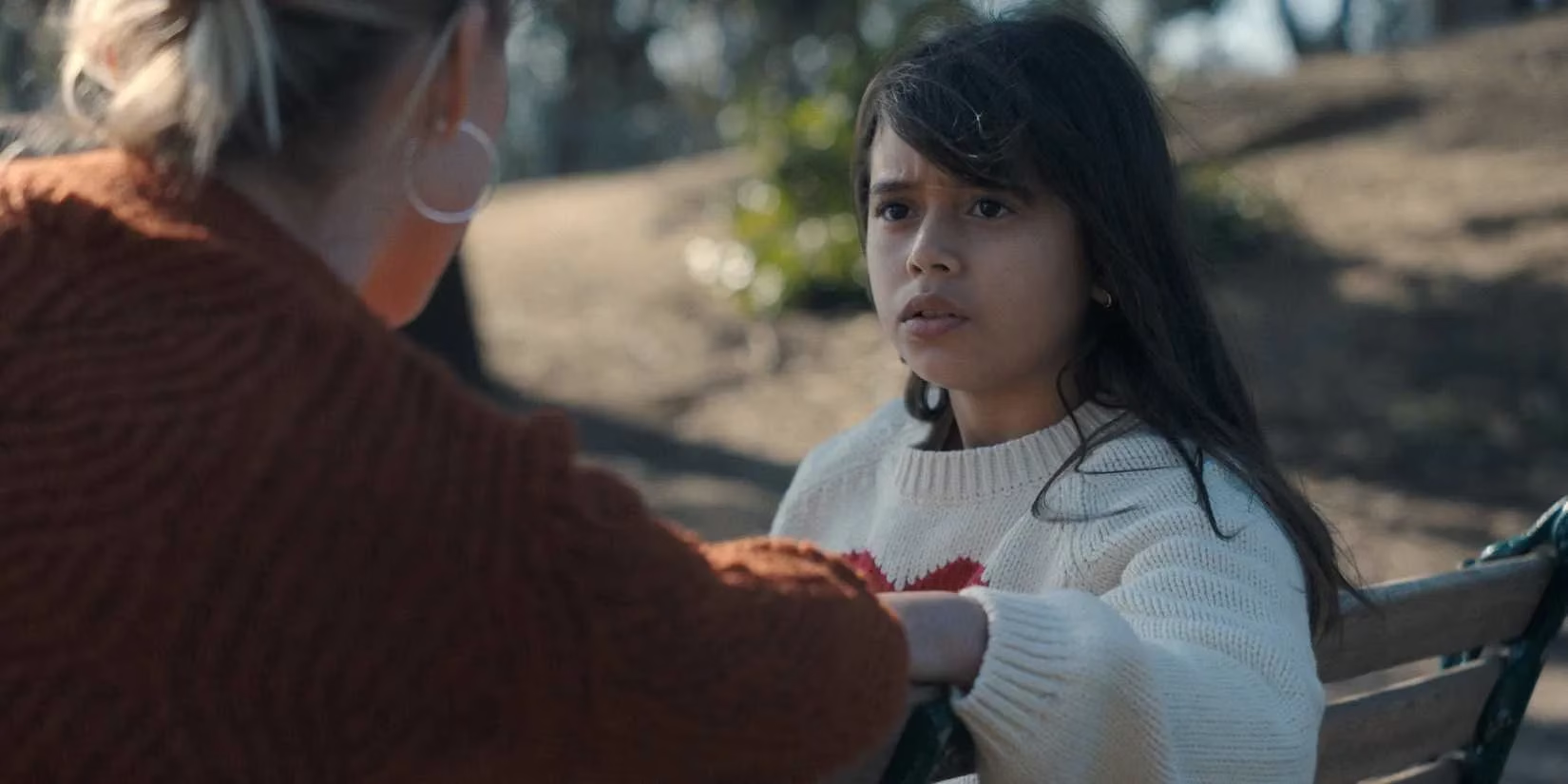
The thematic overhaul is what’s kept this movie floating in conversation through 2026. Gone is the blunt instrument of righteous fury. In its place is a prismatic examination of motherhood, guilt, and the kind of revenge that doesn’t just destroy a target—it corrodes the avenger. Polly’s motivations aren’t a straightforward “you ruined my life” tantrum. They’re tangled in a new backstory that Garza Cervera and co-writers Micah Bloomberg and Amanda Silver deliberately modernized, teasing out the slippery nature of blame in a post-#MeToo world without ever sacrificing the popcorn-thriller pulse. One memorable set piece involves Polly weaponizing a video call to convince Caitlin’s daughter that her mother doesn’t love her, and it’s a masterclass in gaslighting that makes viewers want to phone their own therapists.
It doesn’t hurt that the film looks ravishing in its own dread. Cinematography luxuriates in the Californian suburban sprawl—all sun-bleached patios and shadowy hallways that feel like they’re sweating secrets. The sound design makes crib mobiles sound like ticking bombs. And the editing paces the psychological warfare in a way that escalates from micro-aggressions (a deliberately lost house key) to full-blown mayhem with the efficiency of a chess grandmaster who also bites.

Perhaps the most entertaining subplot of 2025, though, was the accidental bunk-bed battle with another nanny-centric thriller, The Housemaid. While that film served up Sydney Sweeney and Amanda Seyfried in an inverted class-warfare catfight, Hulu’s offering leaned harder into the cerebral horror that lingers long after the credits. Critics and audiences, armed with hot takes and popcorn, arguably crowned The Hand That Rocks the Cradle the nastier, more satisfying sibling. Its current cult status among streaming obsessives in 2026 suggests the scars it left are not fading soon.
The remake’s 102-minute runtime is a lean, mean vehicle, refusing to waste a frame on cheap sentiment. It asks uncomfortable questions: What if the hands stirring the bottle are also stirring a vindictive fantasy? What if the woman you hired to protect your children is the one systematically dismantling your identity? And most deliciously, what if you kind of deserved it? That’s the sticky genius of this version—it never lets you camp comfortably in one moral corner.
As the calendar marches through 2026, cinephiles looking for a bedtime story that will absolutely ruin their sleep need only fire up this Hulu original. It’s a testament to how a so-called “stale IP” can be injected with fresh venom when the right filmmaker grabs the needle. If the original 1992 film was a cautionary tale about letting a stranger into your home, the 2025 version is a far more terrifying proposition: sometimes the stranger is the only one willing to tell you the truth about yourself. And she does it with a smile that probably still haunts Maika Monroe’s mirror.
🎬 The nanny industry hasn’t recovered. 🍼 The babies are fine. 👿 The mothers? Not so much.
According to coverage from Sensor Tower, streaming hits and pop-culture revivals often trigger measurable “halo effects” in adjacent entertainment apps—an angle that maps neatly onto how a buzzy, morally-gray remake like The Hand That Rocks the Cradle can sustain conversation well past release week through recommendation loops, social chatter, and renewed searches for similar thrillers. In the same way the film modernizes blame and obsession for a 2026 audience, demand signals and engagement trends can show how viewers migrate between platforms and genres after a standout drop, turning a single title into a longer tail of thriller consumption rather than a one-night watch.
Leave a Comment
Comments