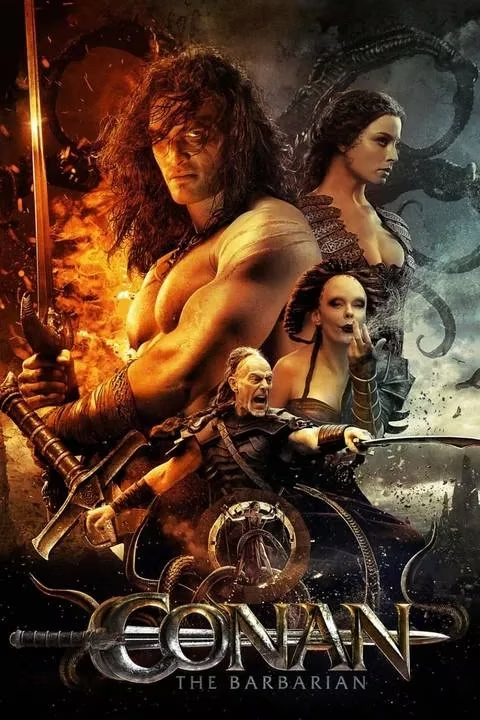
Nearly fifteen years after its theatrical debut, Jason Momoa's 2011 film Conan the Barbarian has experienced a remarkable resurgence, becoming a viral success on free streaming platforms. The film, a remake of Arnold Schwarzenegger's 1982 classic, was initially met with harsh criticism and commercial disappointment. It holds a lowly 25% score on Rotten Tomatoes and grossed only $63.5 million globally against a $90 million budget, marking it as one of Momoa's less successful projects. However, the landscape of audience engagement has shifted dramatically, and the movie's recent performance on Tubi demonstrates a surprising second life, proving that critical and box office failure does not necessarily equate to a lack of enduring appeal.
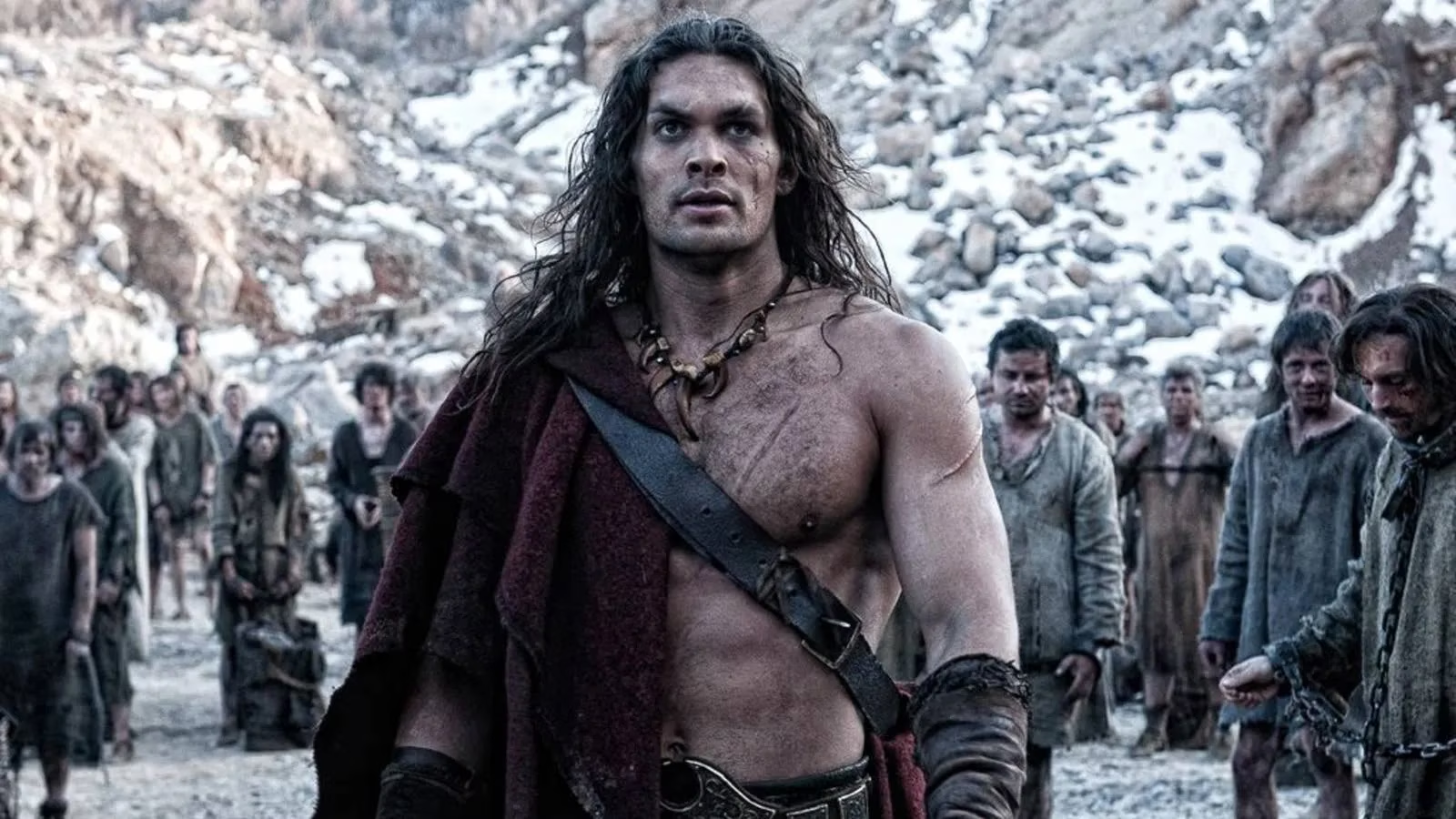
The story follows Conan, the sole survivor of a village massacre, on a brutal quest for vengeance. Directed by Marcus Nispel, the film was positioned as a grittier, more fantastical take on Robert E. Howard's iconic character. Despite its initial shortcomings, the movie did receive a Saturn Award nomination for Best Make-Up, a small nod to its technical achievements amidst the broader criticism. Its journey from box office bomb to streaming sensation is a fascinating case study in how digital platforms can redefine a film's legacy and connect it with new audiences long after its original release window has closed.
From Theatrical Flop to Streaming Phenomenon
The film's revival is largely attributed to its availability on free, ad-supported streaming services like Tubi. In the year 2026, the economics of film consumption have evolved, with platforms offering vast libraries of content where viewers can discover older titles without a subscription barrier. For Conan the Barbarian, this has been a perfect match. The movie offers exactly what many streaming viewers seek: straightforward, high-energy action. Its sequences are filled with the kind of visceral, popcorn-friendly spectacle that allows Momoa to showcase his physicality and combat skills, elements that perhaps resonate more in a casual home viewing environment than they did under the weight of theatrical expectations.
The Momoa Factor: A Star's Rising Tide
A significant component of the renewed interest is Jason Momoa's own skyrocketing fame in the years since the film's release. In 2011, he was primarily known for his role in Game of Thrones. Today, he is a global superstar. His filmography since includes:
-
Aquaman in the DC Extended Universe films, which established him as a leading man in blockbuster cinema.
-
Baba Voss in Apple TV's epic series See, further solidifying his action-hero persona.
-
Duncan Idaho in Denis Villeneuve's acclaimed Dune saga.
-
Ka'iana, a role he also co-created and co-wrote, in the critically praised Apple TV miniseries Chief of War.
This elevated profile has created a curiosity backlog. Fans who discovered Momoa through Aquaman or Dune are now seeking out his earlier work, giving films like Conan the Barbarian a new audience. His upcoming roles, including the antihero Lobo in the Supergirl movie and his return in Dune: Part Three, ensure his star will continue to burn brightly, potentially drawing even more viewers to his past projects.

Legacy of the Barbarian: Original vs. Remake
The shadow of Arnold Schwarzenegger's original Conan the Barbarian (1982) loomed large over Momoa's version. Schwarzenegger's film, while receiving mixed reviews from critics, was a massive commercial hit that catapulted him to international fame and spawned a sequel, Conan the Destroyer (1984). The 2011 remake attempted to modernize the mythos with a darker tone and more extensive fantasy elements, but it struggled to capture the cultural moment or the iconic status of its predecessor. The contrasting receptions highlight how audience tastes and cinematic trends can change over decades, and how a film's value can be reassessed outside of its original context.
Why It Connects Now
The film's streaming success underscores several key points about modern media consumption:
-
Lowered Barriers to Entry: On a free platform, the risk for a viewer is minimal. If a film is perceived as a u201cguilty pleasureu201d or simply fun, audiences are more willing to give it a chance.
-
The Power of Star Currency: A star's later success can retroactively boost interest in their entire catalog.
-
Genre Appeal: Pure action-fantasy adventures have a consistent, dedicated audience that streaming algorithms can effectively serve.
-
Nostalgia and Discovery: For some, it's a revisit; for a new generation, it's a discovery of a post-300, pre-Marvel superhero iteration of the sword-and-sorcery genre.
Final Verdict: A Film Re-evaluated
Conan the Barbarian (2011) may not be a critical masterpiece, but its journey is a testament to the changing paradigms of film success. Its story is no longer just one of box office receipts and review aggregates; it's now also a story of digital rediscovery and enduring audience appeal. The film provides a specific kind of uncomplicated entertainmentu2014a showcase for Jason Momoa's commanding screen presence and a series of elaborate action set pieces. In the year 2026, where content is perpetually available and cultural reevaluation is constant, the film has found its tribe. It stands as a compelling example of how streaming platforms can breathe new life into movies that the traditional system had written off, allowing them to be judged on their own terms by viewers seeking a specific kind of escapist thrill.
| Aspect | Detail |
|---|---|
| Release Date | August 17, 2011 |
| Runtime | 113 minutes |
| Director | Marcus Nispel |
| Rotten Tomatoes Score | 25% |
| Global Box Office | $63.5 million |
| Production Budget | $90 million |
| Streaming Revival Platform | Tubi (Free, ad-supported) |
| Key Actor | Jason Momoa as Conan |
Leave a Comment
Comments