As a lifelong film fanatic, I’ve always been fascinated by how stories hop across oceans. You know, it’s like a cinematic game of telephone—sometimes the message gets garbled, but other times it transforms into something entirely new and brilliant. One of my absolute favorite journeys is the way Hollywood has looked eastward and reinvented Japanese classics. From blood-soaked samurai legends to skin-crawling horror, the results can be mind-blowing. Let me walk you through some of the most unforgettable examples, and believe me, you’ll never see these movies the same way again.
First up, we have to talk about the granddaddy of them all: A Fistful of Dollars. I mean, can you imagine? Sergio Leone basically copied Akira Kurosawa’s Yojimbo plot beat for beat—a lone stranger plays two rival gangs against each other in a dusty town—and he didn’t even bother asking for permission. The result was a spaghetti western masterpiece that turned Clint Eastwood into a global icon, but it also landed Leone in hot water. Toho sued, and eventually they settled out of court. Talk about audacity! The film launched the Dollars Trilogy, and honestly, it’s still one of the coolest movies I’ve ever seen. That opening scene where Eastwood rides into town with that iconic score? Goosebumps every time.
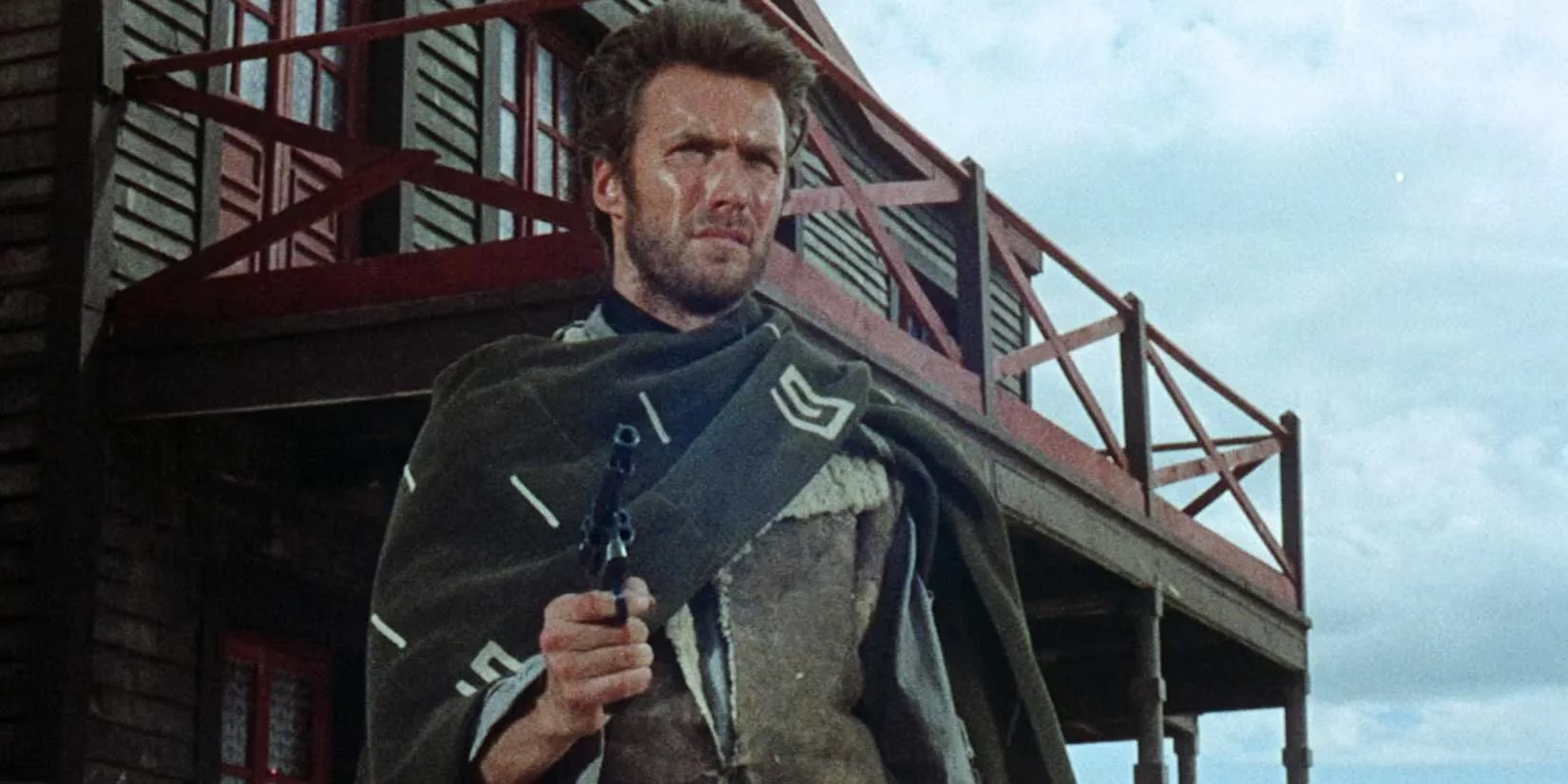
Then there’s The Magnificent Seven, which took Kurosawa’s Seven Samurai and swapped the ronin for cowboys. Honestly, it feels like the most natural transition in film history. Critics often pointed out that Kurosawa himself borrowed heavily from western tropes, so bringing the story back to the American West was almost a homecoming. John Sturges assembled a dream cast—Yul Brynner, Steve McQueen, Charles Bronson—and crafted what many consider the greatest ensemble western ever made. The tale of seven gunmen defending a helpless village works just as well in Mexico as it did in Japan. Every time I watch it, I’m reminded that heroism and sacrifice are universal languages.
Speaking of unlikely inspirations, did you know Star Wars is basically a space opera reimagining of Kurosawa’s The Hidden Fortress? I’m not making this up! George Lucas has admitted the influence, and once you see the parallels, you can’t unsee them. A princess in hiding, a grouchy general, and two bumbling peasants who stumble through a civil war—sound familiar? Swap the peasants for R2-D2 and C-3PO, set it in a galaxy far, far away, and you’ve got the backbone of A New Hope. The film’s genius is how it channels the energy of a samurai road movie into a sci-fi epic. Honestly, it makes me appreciate both films on a whole new level.
Fast forward to the 90s, and we got Last Man Standing, a neo-western gangster flick starring Bruce Willis. This one is another direct descendant of Yojimbo, but unlike the cowboy remakes, it transplants the story to a dusty border town during Prohibition. Willis plays a wandering gunman who plays two bootlegging gangs against each other. The film bombed at the box office and critics weren’t kind, but I’ve got to say, there’s something oddly hypnotic about its gritty nihilism. It’s a fascinating, flawed experiment that proves you can’t quite capture lightning in a bottle twice.
And right now, in 2026, we’re still seeing brilliant reinventions. Last year, Spike Lee dropped Highest 2 Lowest, his take on Kurosawa’s High and Low. Instead of a shoe company, Lee sets the story in the cutthroat world of a music label, with Denzel Washington delivering a powerhouse performance as a titan caught in a kidnapping nightmare. Critics went wild—87% on Rotten Tomatoes—and for good reason. Lee doesn’t just remake; he recharges the material, infusing it with a sharp commentary on wealth and power that feels disturbingly contemporary. It’s proof that Kurosawa’s themes are timeless.
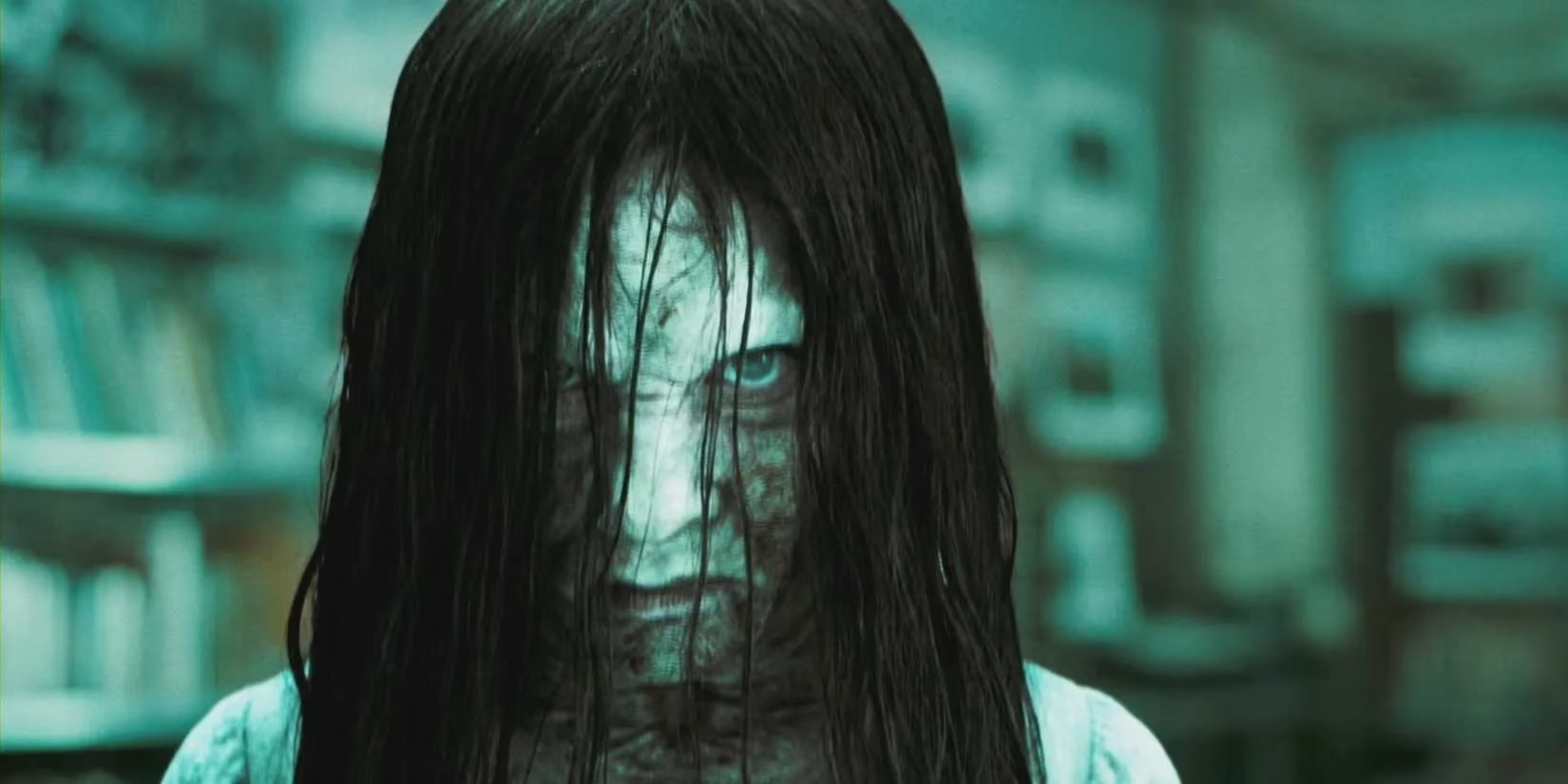
Of course, Japan’s horror legacy gave us some absolute chills. The Ring in 2002 is the gold standard. Gore Verbinski’s remake of Ringu stayed remarkably faithful to the 1998 original, right down to the nightmare imagery of Samara crawling out of that well. I’ll never forget the first time I saw that video sequence—it messed me up for weeks. The film was a massive hit, pulling in over $249 million worldwide and sparking a wave of horror remakes. To this day, whenever my phone rings unexpectedly, a little part of me shivers.
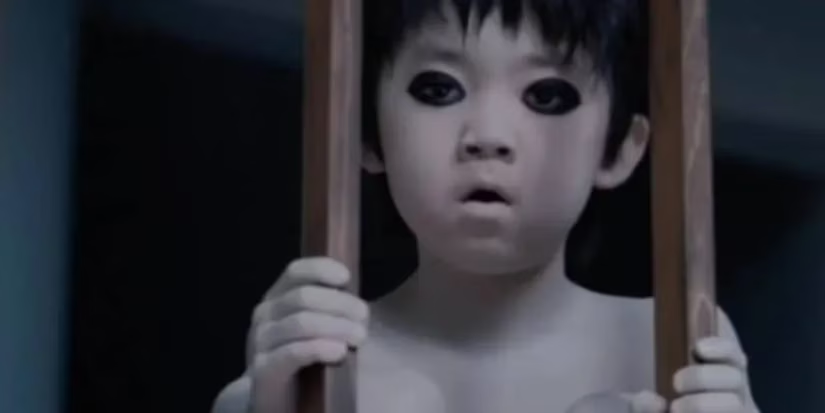
Then there’s The Grudge, the 2004 remake of Ju-On: The Grudge. Here’s the kicker—the American version didn’t even bother moving the curse to the States. Instead, an American family relocates to Tokyo for work, and the vengeful ghosts zero in on them. Honestly, that decision made the film even more terrifying because it felt like a visitor’s nightmare, a place you can’t escape. Critics hated it, but audiences ate it up to the tune of $187 million. It’s not high art, but it’s effective, and that croaking noise still haunts my dreams.
Quentin Tarantino also owes a debt to Japan, though he’d never call Kill Bill a direct remake of Lady Snowblood. Still, the DNA is unmistakable: a wronged woman seeking bloody vengeance on those who destroyed her life, told in a fractured, chapter-based structure. Tarantino remixed it with kung fu flicks and spaghetti westerns, making the story wholly his own, but lift the hood and you’ll find a very Japanese heart beating underneath. It’s a masterclass in how to honor your influences without being a slave to them.
On the tender side, Hachi: A Dog’s Tale takes the true story of Hachikō—the Akita who waited for his owner every day for nine years after his death—and re-sets it with Richard Gere. The 2009 American version doesn’t change much, because the original Japanese film was already pure emotional dynamite. I dare you to watch this without reaching for tissues. It’s a simple story of loyalty and love, and it proves that some feelings need no translation.
Looking at this lineup, I can’t help but marvel at how Japanese cinema has been a silent wellspring for so many American classics. Sometimes the remakes surpass their sources, sometimes they stumble, but they always add a new layer to the conversation. Personally, I love the messy, unauthorized brilliance of A Fistful of Dollars and the shimmering terror of The Ring, but the one I keep returning to is The Magnificent Seven. It reminds me that even in a different language and a different desert, a good story about standing up for the little guy never gets old.
So next time you’re marathoning westerns or horror flicks, remember—the ghosts, the gunslingers, and even the Jedi might just be wearing a samurai’s soul underneath.
Leave a Comment
Comments