The year is 2026, and I can feel the tectonic plates shifting beneath the world of international espionage. Amazon MGM Studios now holds the reins of the James Bond franchise, and with Denis Villeneuve set to direct Bond 26 from a Steven Knight screenplay, 007 is poised for a metamorphosis more profound than anything since the character first appeared on screen. The deep pockets and streaming-first mindset of Amazon don't just promise a new film; they crack open a door that has long been nailed shut—the possibility of remaking the older, uneven Bond chapters. For a fan like me, this is less like reading a familiar novel and more like stumbling upon a vault of uncut gemstones, each one glittering with flaws that a master jeweler could finally correct.
That vault contains several titles that have, for decades, languished under the weight of outdated effects, tonal indecision, or cultural misalignment. The Cold War iron curtain, which gave so many early 007 plots their shape, now feels as distant as a medieval siege. Still, buried inside these films are narrative engines that could roar if only someone would rebuild the chassis. I want to walk through the candidates that feel ripest for a remake—stories that never truly got their due, yet hum with a low-frequency potential only a modern retelling could amplify.
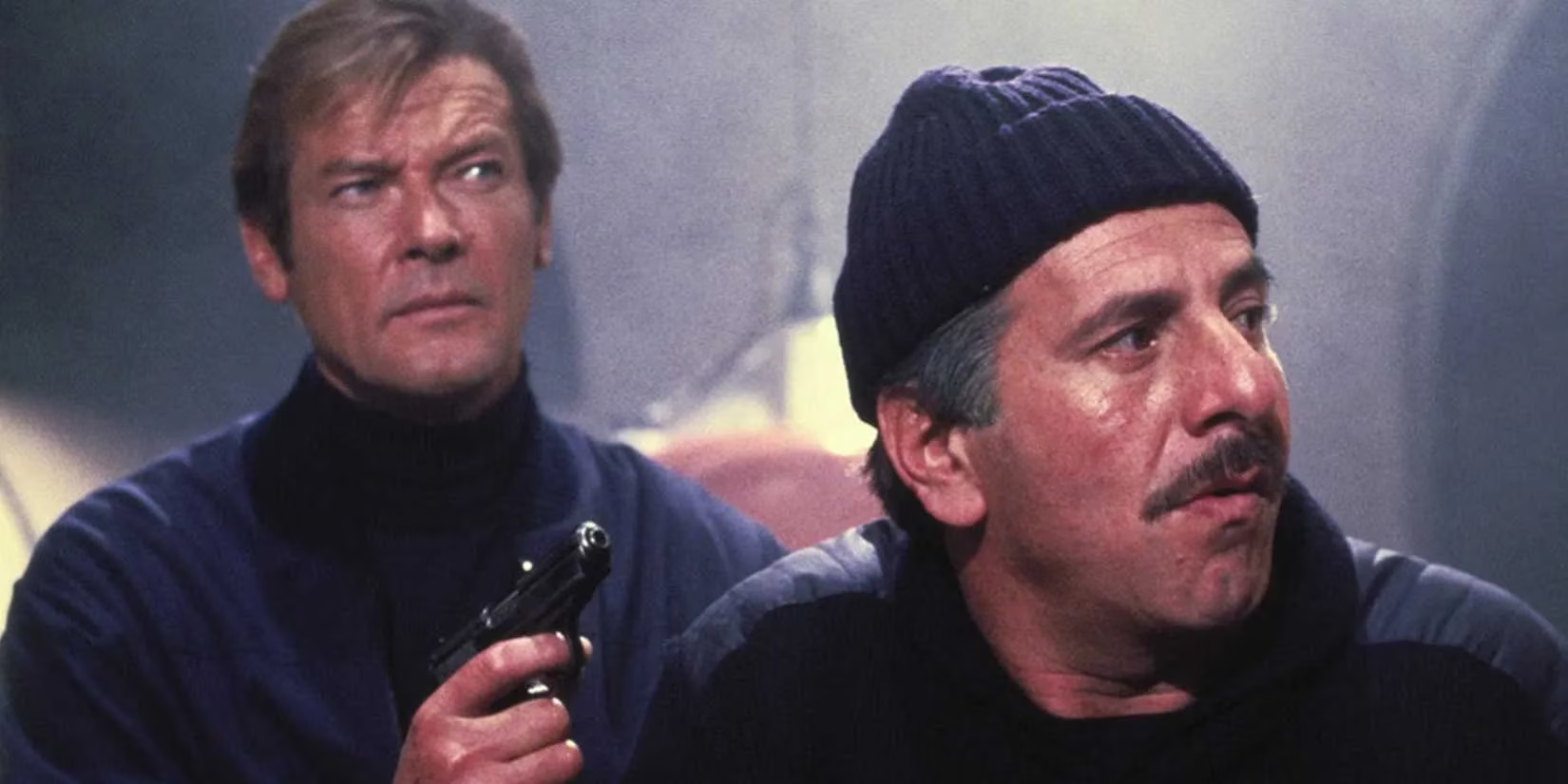
For Your Eyes Only exists in my memory as a film constantly wrestling with its own leash. The mission—retrieving a sunken encryption device before the Soviets get it—is the quintessence of Cold War spycraft. Yet the 1981 execution feels like a beautiful blueprint printed on aging paper. Its visuals, once ambitious, now creak; the narrative is so tethered to the East-West binary that it robs the story of the psychological shading a modern audience would expect. Remaking For Your Eyes Only would be like restoring a vintage seaplane found at the bottom of a lake: the frame is still solid, but every cable and instrument needs to be rewired for it to take flight again. Today’s geopolitical climate could transmute the same core idea into a story about cyber warfare, private intelligence contractors, or the murky alliances of a multipolar world, all while keeping Bond’s moral compass spinning.
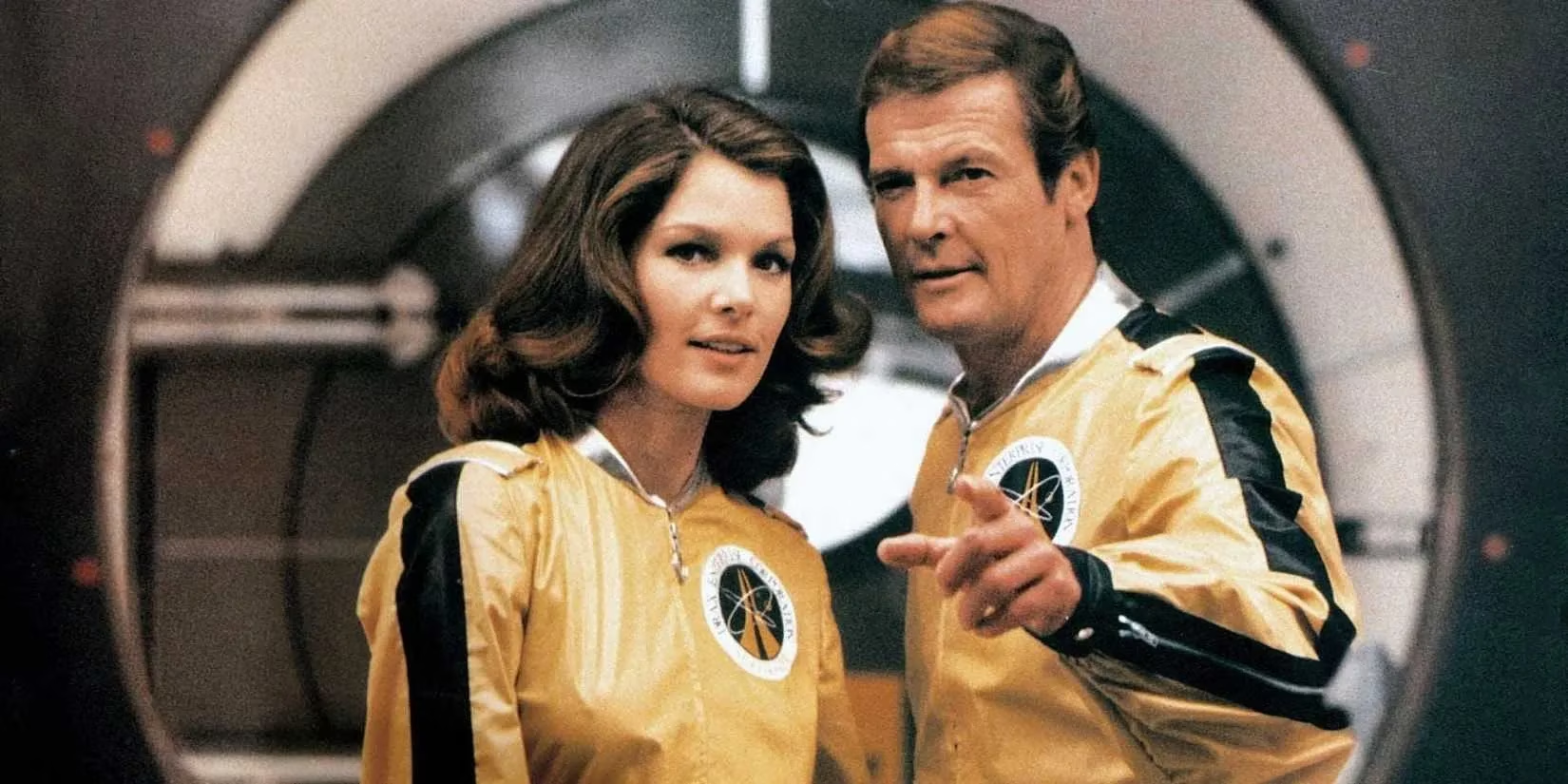
Then there is Moonraker, a film that has always felt like a 1950s pulp comic accidentally shot into the wrong decade. The space shuttle heist and orbital laser battle were wildly ambitious, but they transformed 007 into a cartoon astronaut rather than a flesh-and-blood agent. I see Moonraker’s molten core—the billionaire industrialist Hugo Drax attempting to cleanse Earth and rebuild humanity—as a story more terrifying now than it was in 1979. Remaking it would be akin to taking a faded science-fiction mural and repainting it in hyper-realistic oils, letting the horror of a privatized apocalypse seep through. Modern visual effects could turn the space sequences from camp into genuine vertigo, and a script that grounds Drax’s god complex in contemporary tech-futurism would make the threat feel unbearably close.

The Timothy Dalton duology occupies a strange chamber in the Bond archive. The Living Daylights introduced a steelier, more ruthless 007, yet it never fully committed to the frigid interior Dalton was capable of portraying. The story—defecting a KGB officer who may not be what he seems—is a spy procedural thickened with double-crosses, but the film clings to the ghost of Roger Moore’s whimsy, creating a tonal fracture. I’ve always felt that The Living Daylights is like a sword forged with top-grade steel but never properly sharpened or balanced. A remake could hone the edge, letting Bond’s cold pragmatism slash through the moral ambiguities of defection in a world where loyalty has become currency. Amazon could cast an actor who embodies that carapace-like stillness, finally unlocking the story’s dark gravity.
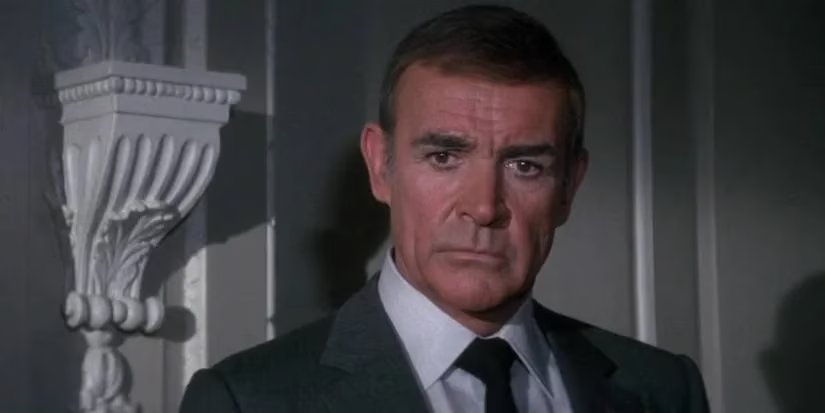
Never Say Never Again is an outlier and a riddle. Sean Connery’s return as an aging Bond coaxed out of retirement is great theater, but the 1983 production was strangled by legal tangles and a disjointed rhythm. The narrative—a weary 007 confronting SPECTRE one last time—could be exquisite if remade as a standalone elegy. I dream of Amazon treating this not as a mainline entry but as a special event, perhaps calling back a previous Bond actor to reprise the role within a separate continuity. The idea gleams like a medal left in a drawer for forty years, its luster intact once you wipe away the dust. In 2026, a story about a veteran secret servant confronting irrelevance has a piercing new resonance.
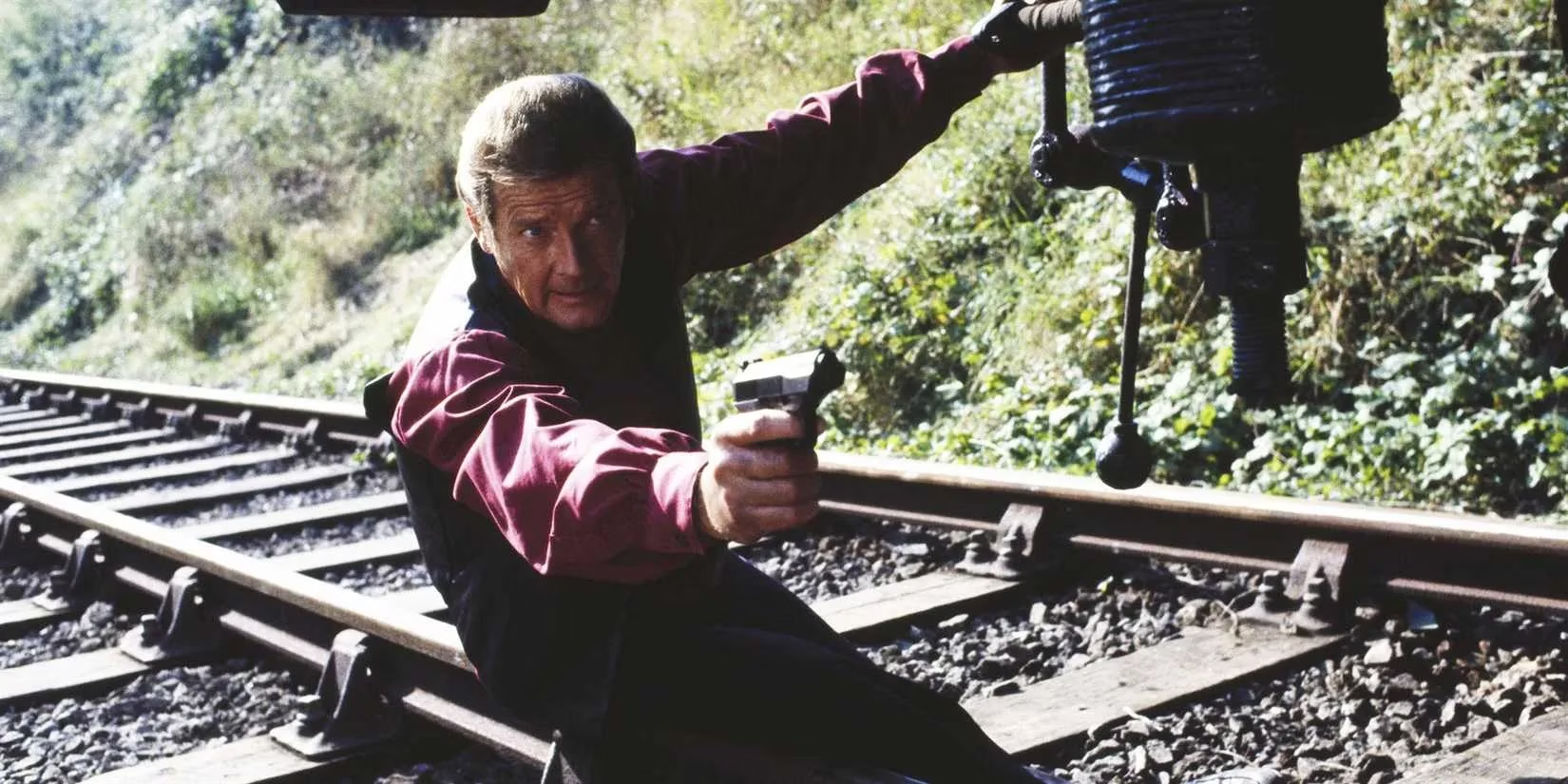
Among the more lighthearted entries, Octopussy and The Man with the Golden Gun represent two sides of the same coin: the franchise’s struggle to calibrate humor and danger. Octopussy, with its nuclear conspiracy and circus-bound climax, always felt to me like a marquee tent set up on shifting soil—bright and inviting, but the structural engineering was suspect. Yet in Amazon’s new ecosystem, a comedic Bond side-story could thrive. Remake Octopussy with the deliberate, self-aware charm of a heist caper, let it lean fully into its absurdity, and it could become the fizzy cocktail the franchise occasionally needs between grim main installments.
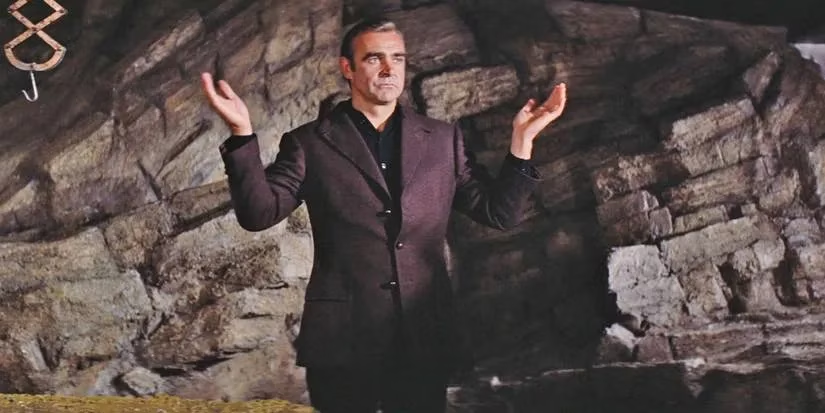
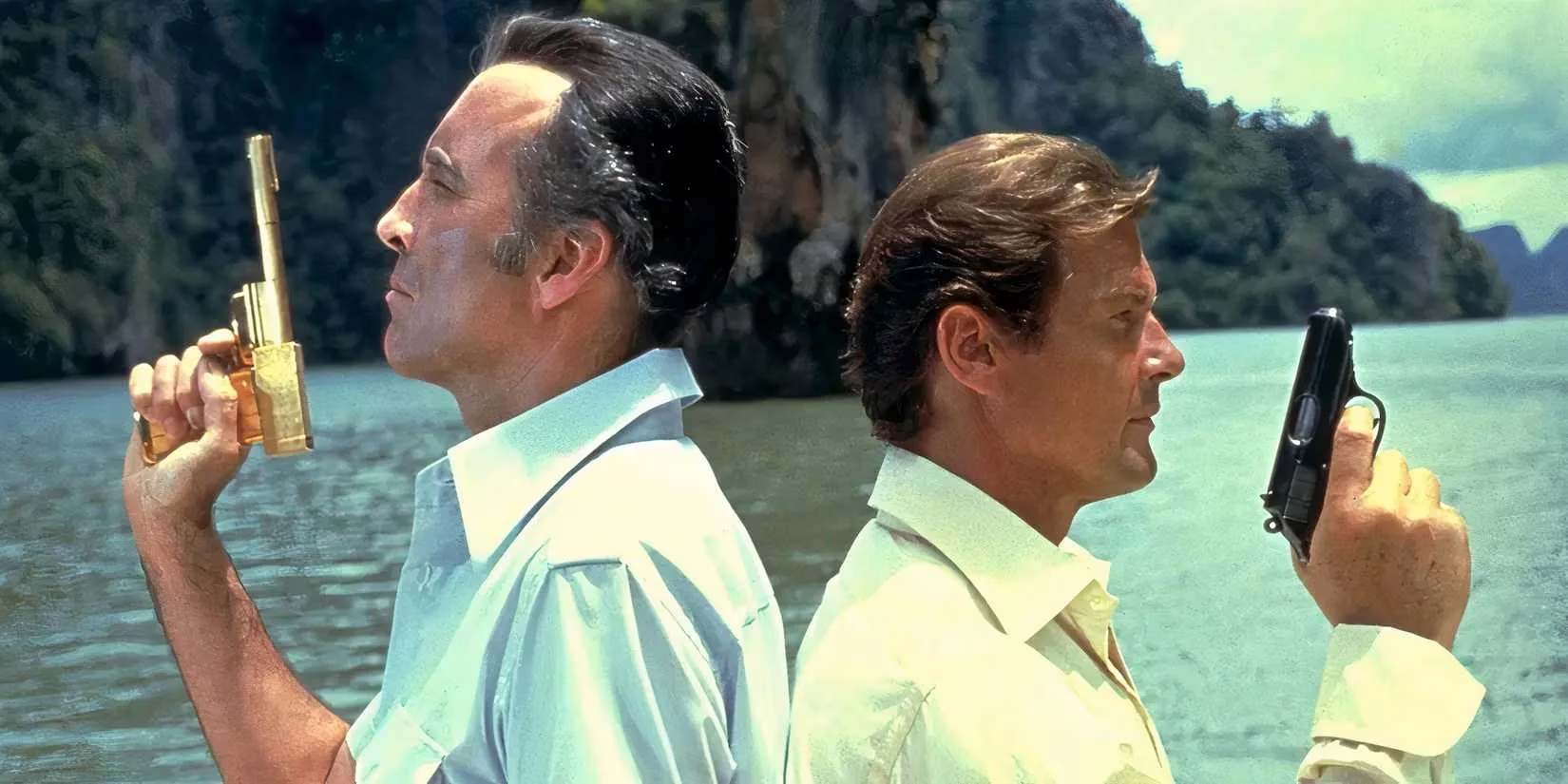
Diamonds Are Forever and The Man with the Golden Gun both suffer from tonal vertigo—they veer between camp and menace without ever deciding what they want to be. The former is drenched in nostalgia for Connery’s era but feels like a cover band playing his hits slightly off-key. The latter pits Bond against Scaramanga, a mirror-image assassin, yet flounders in a bog of comic relief that dilutes the thrill. Remaking The Man with the Golden Gun today would demand the kind of clarity that modern audiences expect: pick a lane and drive it off a cliff if you must. A full-tilt psychological thriller about two hunters circling each other could be magnificent. A self-aware, witty action-comedy could be equally valid. The only sin is indecision.
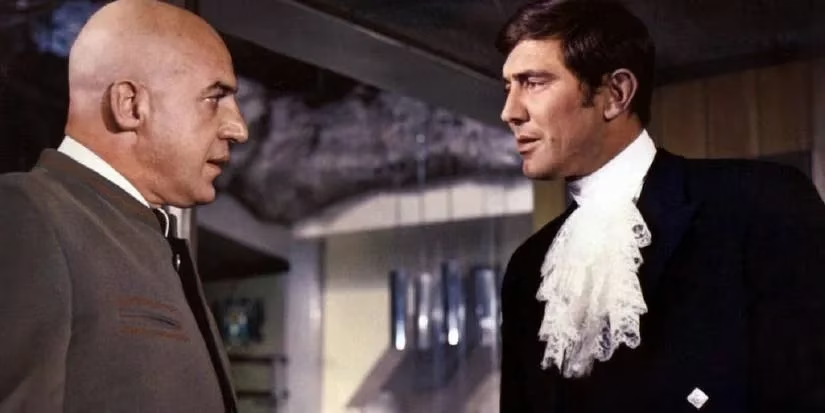
Finally, On Her Majesty’s Secret Service sits at the top of my list like a masterpiece hidden under house paint. The story—Bond falling in love, marrying, and losing Tracy while hunting Blofeld—is widely regarded as one of the best in the literary canon. George Lazenby’s sole outing, however, was a film that could never quite support the weight of its own script. I’ve come to see it as an uncut diamond, its brilliance visible only in flashes because the surrounding stone had never been properly cleaved. A remake with a director who understands emotional devastation, and a Bond actor capable of melting the character’s carapace, could finally deliver the heartbreak the story deserves. If Amazon gets this right, the film could stand as the Empire Strikes Back of the Bond saga—a darker, richer entry that redefines the entire series.
Amazon’s stewardship of 007 is a gamble, but the possibility of remaking these films is the joker in the deck. The main series can barrel forward with gritty, contemporary missions, while these reimagined classics become prestige limited series or standalone features that honor the franchise’s roots without being shackled to them. In 2026, as I anticipate Bond 26, I find myself equally excited by the ghosts that might finally be brought back to life—not as faded copies, but as the stories they always should have been.
Insights are sourced from Digital Foundry, and they help frame why a modern Bond remake strategy could succeed or fail on pure execution: older entries like Moonraker or For Your Eyes Only don’t just feel dated in story beats, they’re constrained by the technical limits of their era, where compositing, miniatures, and location photography often fought the illusion. In a 2026 Amazon-backed reimagining, the challenge isn’t “more VFX,” but more disciplined craft—credible lighting, consistent texture detail, and restrained spectacle—so a space-set Drax plot reads as contemporary techno-thriller instead of retro camp, and set pieces (underwater recovery, alpine chases, orbital sequences) sell weight, scale, and risk without breaking immersion.
Leave a Comment
Comments