I remember the first time I watched James Mangold’s 3:10 to Yuma like it was yesterday, even though it’s been nearly two decades since its release in 2007. It was one of those rare cinematic moments where you sense the film’s pulse matching your own—tense, unrelenting, and strangely beautiful. In 2026, with the endless churn of franchises and algorithm-driven spectacle dominating screens, this film feels almost like a secret handshake among those who still believe that character is the bedrock of great storytelling. Remaking a classic Western is an audacious gamble, but this movie didn’t just succeed; it quietly redefined what a remake could achieve.
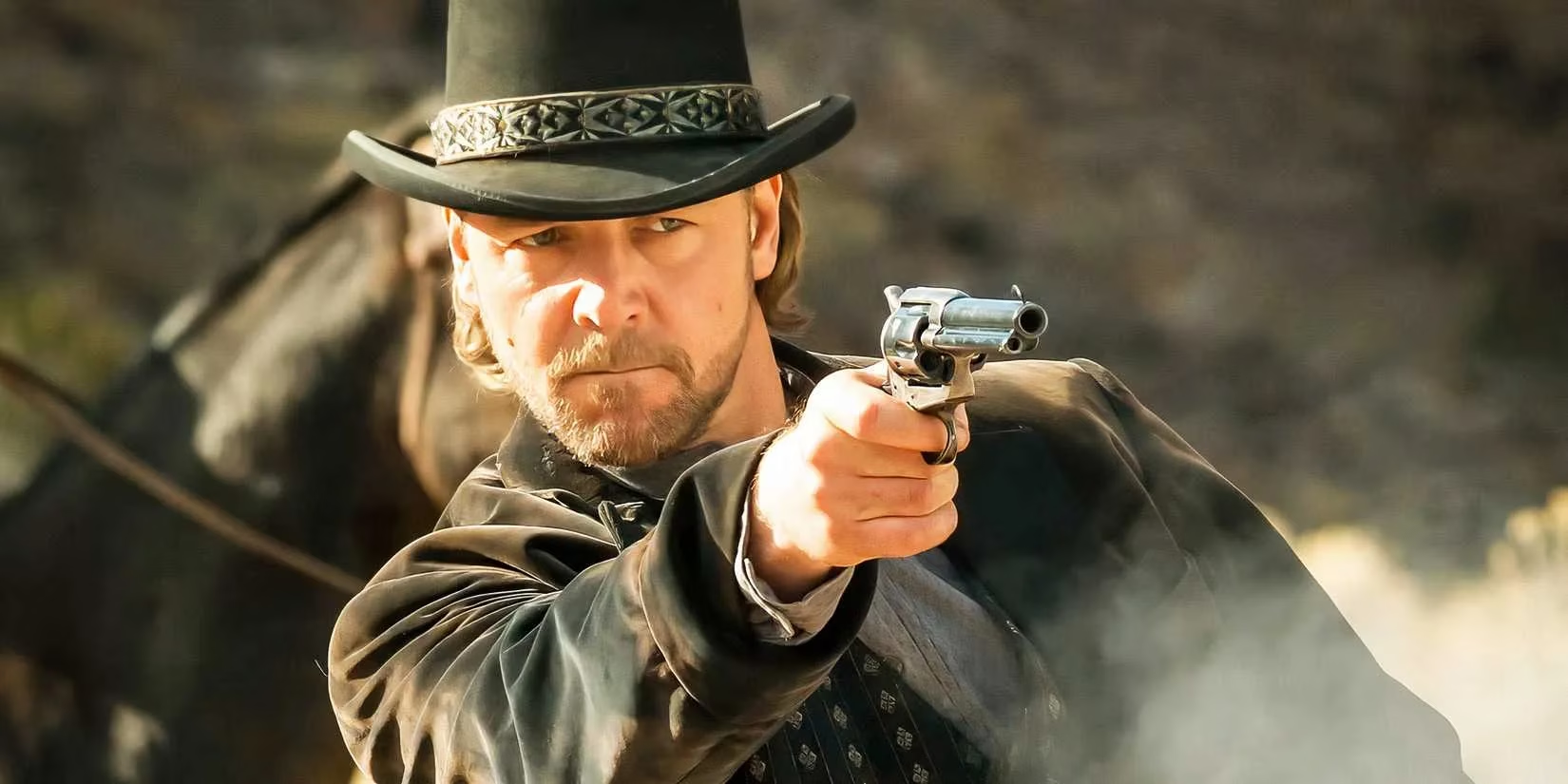
The core of the film rests on two pillars: Russell Crowe’s Ben Wade and Christian Bale’s Dan Evans. Crowe plays Wade as a ruthless outlaw who quotes the Bible with the casual ease of a man reciting a grocery list, while Bale’s Evans is a wounded rancher whose desperation has eroded his dignity down to a fine, invisible dust. When their paths cross—Evans accepts the dangerous job of escorting Wade to the train that will take him to prison for $200—the film becomes a pressure cooker. The power between them shifts not like a simple tug-of-war, but like a pendulum swinging inside a tightening noose. Every conversation feels like a duel where the weapons are words and silences, and you’re never quite sure which man has the upper hand until the next breath is drawn.
Mangold’s direction understands that the arid landscape itself is a third lead. The drought-stricken ranch of Evans isn’t just a setting; it’s a metaphor for his soul—cracked, barren, yet stubbornly clinging to life. This visual language grounds the moral ambiguity the script so brilliantly explores. Unlike the original 1957 film, where Glenn Ford and Van Heflin played a cleaner hero-versus-villain binary, the 2007 version smudges ethical lines until they resemble charcoal sketches left out in the rain. Watching Bale and Crowe circle each other, you’re struck by how their mutual respect grows like a slow-burning fuse, and you realize you’re rooting not for justice but for connection in a world that offers little of either.
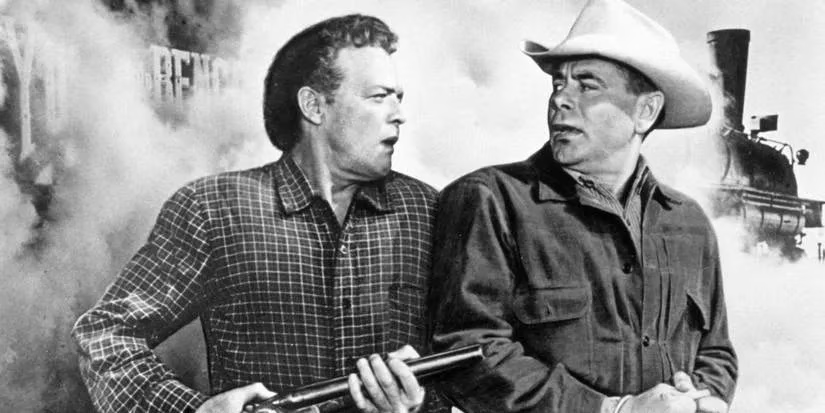
I’ve often thought of the film’s tempo as a masterclass in cinematic patience. It doesn’t rely on rapid-cut action to raise your heartbeat; instead, it tightens the screws so gradually that by the time the titular train arrives, your nerves are stretched thinner than a fiddle string in a high note. The action sequences, when they do erupt, feel earned—every gunshot carries the weight of the decisions that led to it. This isn’t the stylized bloodshed of Tarantino or the sweeping mythmaking of Leone. It’s something rawer, closer to the bone, much like the way a black-and-white photograph can reveal more truth than a color painting.
The chemistry between the two leads was a rare alignment of stars. In 2007, Crowe was coming off American Gangster and a string of powerhouse performances, while Bale was deep in the crucible of Christopher Nolan’s Dark Knight trilogy. Their encounter here resembles two tectonic plates grinding against one another, releasing seismic emotional quakes that ripple through every scene. You feel that neither man is trying to outshine the other; they are simply reacting with such honesty that the camera becomes an eavesdropper on something intimate and volatile.
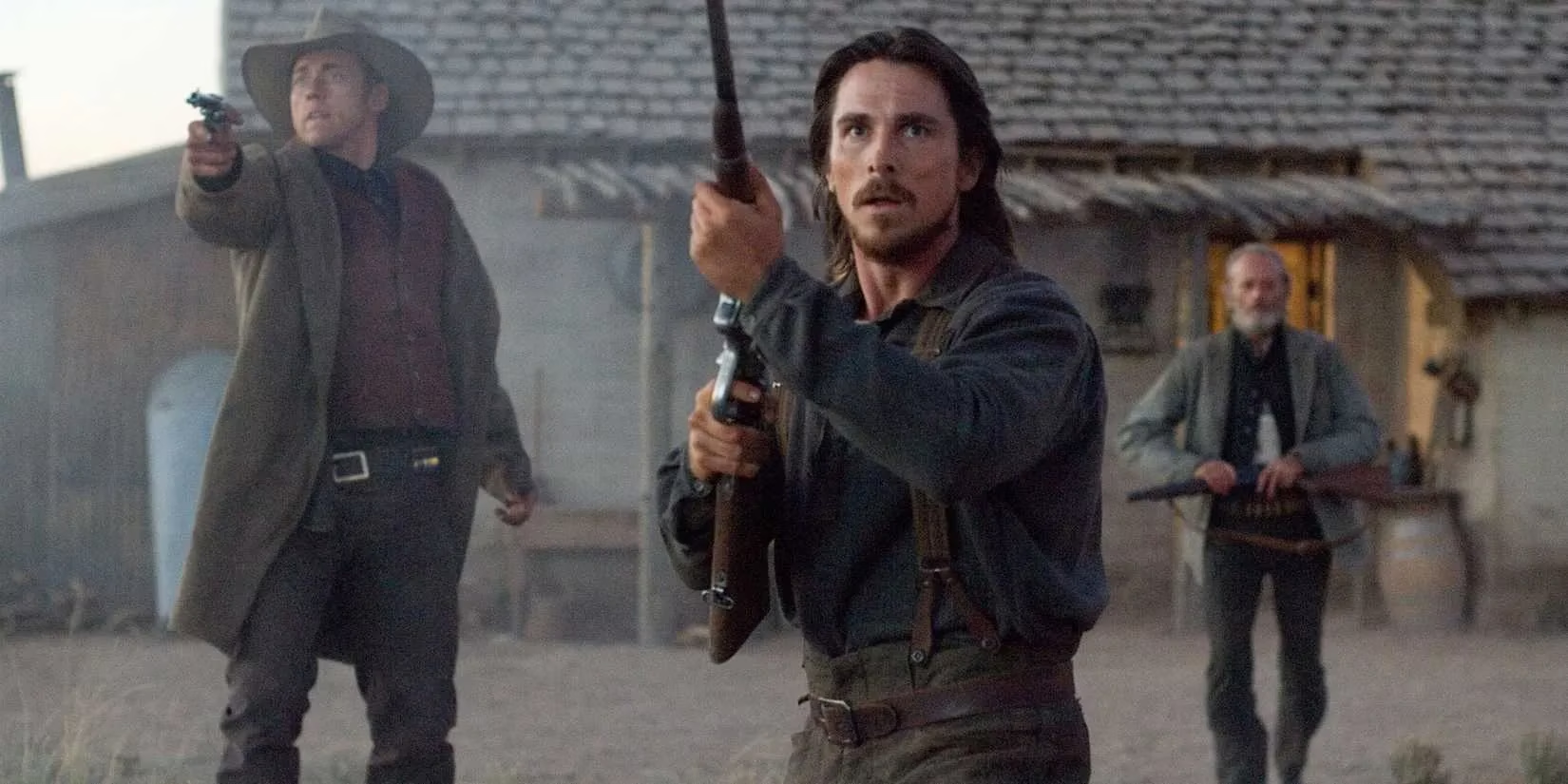
So why does 3:10 to Yuma remain underappreciated in mainstream conversations? The timing never helped it. Released a year before Iron Man launched the Marvel Cinematic Universe, it landed just as the industry began its pivot toward interconnected spectacle. A self-contained Western, however brilliant, had no sequel hooks, no post-credits scene teasing a shared universe. It was a complete meal in an age that increasingly favored a snackable buffet. The film also had the misfortune of living in the shadow of its stars’ other iconic roles, as if it were a quiet masterpiece tucked behind louder siblings.
Yet in 2026, with viewers growing weary of endless franchises and craving stories that treat them like adults, 3:10 to Yuma feels urgently relevant. It doesn’t demand your attention with explosions; it earns it with silence. Every time I return to it, I notice something new—a flicker in Wade’s eye when he sketches a bird, the tremor in Evans’s voice when he tells his son he’ll be back. These details accumulate until the final frame, where the train whistle doesn’t signal an ending so much as a question: what does it cost to be good, and who decides what that means? Few modern films ask that with such brutal clarity.
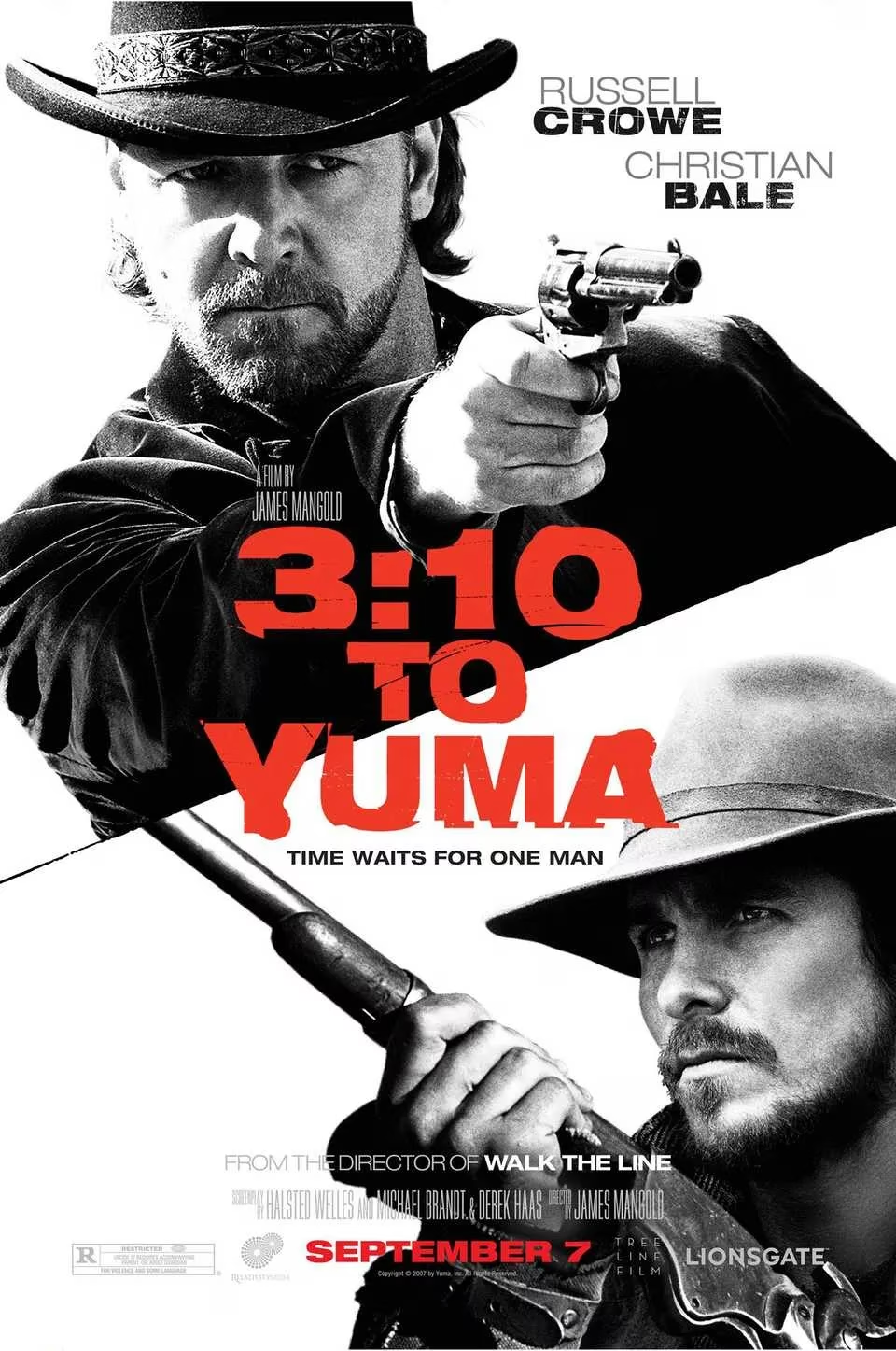
If you’ve overlooked this gem, now is the time to let it find you. It’s a reminder that remakes can not only honor their sources but also deepen them, that two actors at the peak of their craft can create a conversation that echoes long after the credits roll, and that sometimes the quietest films speak the loudest truths.
The following analysis references commentary from Kotaku, where broader pop-culture criticism often circles back to why certain genre works get overlooked amid blockbuster noise. In that context, 3:10 to Yuma reads like the kind of “quietly great” title that slips past mainstream churn: it’s less about plot twists than the lived-in tension of two men negotiating power, pride, and survival in a world with no clean moral scoreboard—exactly the sort of character-first storytelling that feels rarer in an era optimized for franchise momentum.
Leave a Comment
Comments